
The Imam Reza Shrine in Mashhad, Iran, is a site of immense historical and political significance, reflecting the complex interplay of power, religion, and culture in the region. I was fortunate enough to visit the revered Imam Reza Shrine in Mashhad, Iran, a site that holds deep significance for millions of Shia Muslims worldwide. As I explored the sprawling complex, I was struck by the profound spirituality and devotion of the pilgrims. Being referred to as a ‘mashti’ after visiting this holy site was a humbling experience.
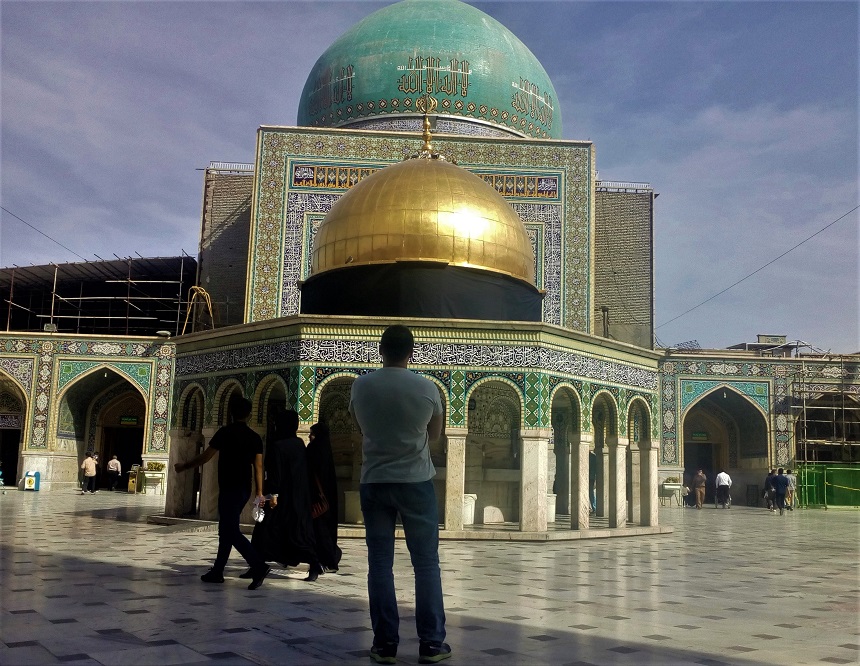
Historical Background
- The shrine was built around the tomb of Imam Reza, the eighth Shia Imam, who died in 818 AD under mysterious circumstances, allegedly poisoned by the Abbasid Caliph Al-Ma’mun.
- Initially, a modest structure, the shrine evolved over time into a grand complex, reflecting various architectural styles from different periods.
Dynasties and Development
- Timurid Period (1370-1507 CE): The shrine complex experienced substantial growth, with notable contributions from Shahrukh Mirza and his wife, Gohar Shad, who commissioned the renowned Gohar Shad Mosque in 1416.
- Safavid Era (1501-1786 CE): The Safavids declared Shiism the state religion and significantly expanded the shrine, adding golden domes, tiled minarets, and spacious courtyards. Shah Abbas I played a crucial role in promoting the site to challenge Ottoman-controlled holy sites.
- Qajar Era (1779-1923): The Qajar kings further enlarged and ornamented the shrine complex, with Nasir al-Din Shah renovating the ivan leading into the shrine chamber and installing masterful mirror-work.
- Pahlavi Era (1925-1979): The Pahlavi dynasty’s modernization efforts led to significant changes, including the demolition of surrounding neighborhoods, which isolated the shrine from the city’s daily life.
Political Significance
- The shrine has been a site of contestation and ideological articulation, reflecting the complex histories of power and religion in Iran.
- During the 1979 Revolution, the shrine became a hub of discontent, and after the revolution, the Islamic Republic reoriented the shrine’s significance, reconnecting it to the city and expanding its facilities.
- The Islamic Republic has utilized the shrine as a symbol of its authority, renaming courtyards and facilities to reflect revolutionary themes.
Cultural and Spiritual Importance
- The Imam Reza Shrine is a vital cultural and spiritual hub, attracting millions of pilgrims and visitors annually.
- It serves as a center for Shia scholarship, cultural patronage, and artistic expression, showcasing intricate tilework, calligraphy, and ornate designs.
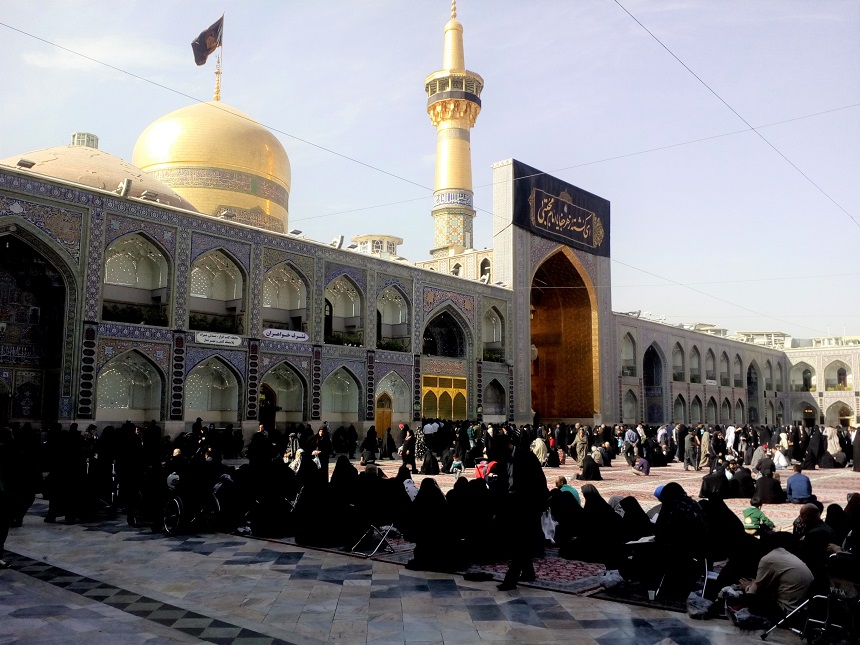
Luckily, I had the privilege of having a personal guide who expertly navigated me through the intricate network of courtyards, mosques, and museums within the shrine. Their in-depth knowledge of the site’s history, architecture, and cultural significance greatly enriched my experience.
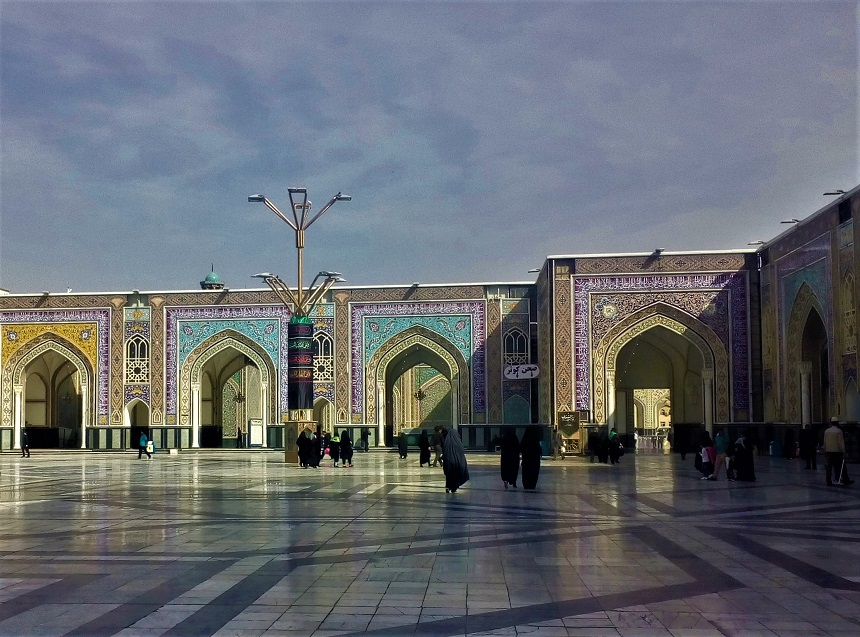
As I walked through the complex, I was touched by the warm hospitality of the Iranians I met, who would often say ‘eltemâs duâ’ or ‘keep me in your prayers’, a phrase that embodies the sense of community and mutual support that pervades this sacred place.
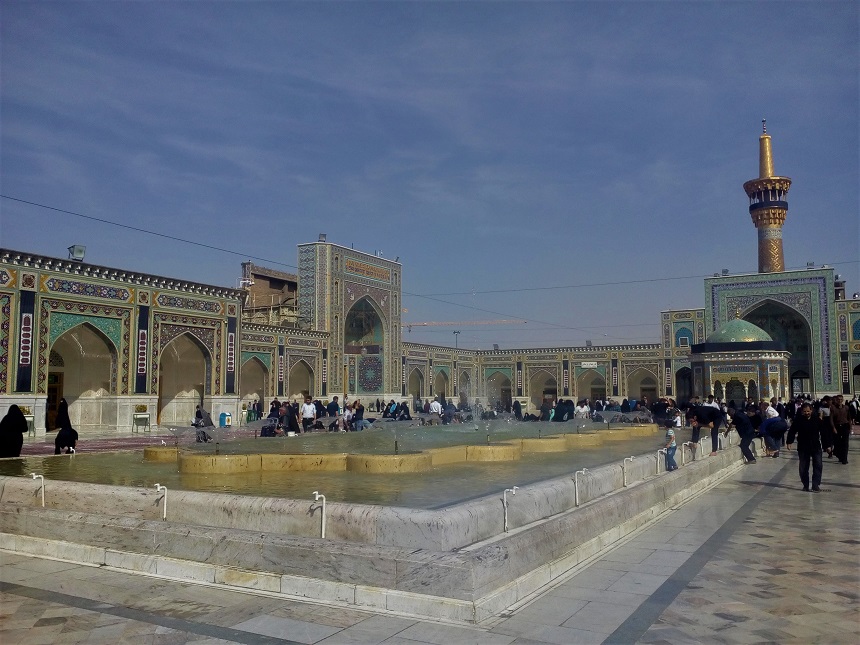
I met this dedicated guide, Amir, who would be showing me around the shrine complex. Amir was knowledgeable and passionate about the history and significance of the site. As we walked through the sprawling complex, he shared fascinating facts about the shrine’s architecture, which blends Persian and Islamic styles, featuring stunning tilework, grand domes, and elegant minarets.
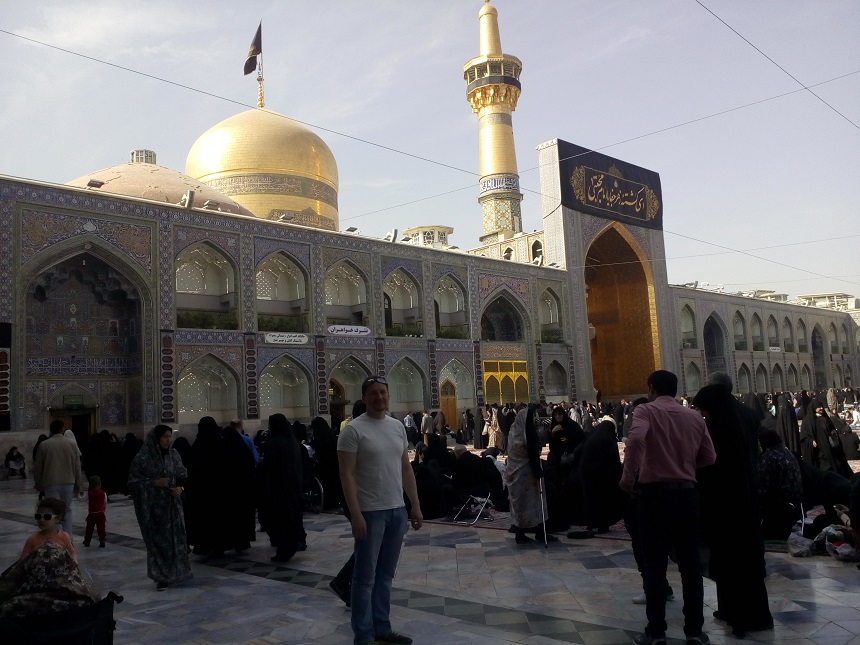
The Imam Reza Shrine in Mashhad, Iran, is renowned for its breathtaking interior design and décor, reflecting a blend of traditional Persian and Islamic architectural styles. Here are some notable features:
Intricate Tilework
- The shrine’s walls and floors are adorned with exquisite tilework, featuring intricate geometric patterns, floral motifs, and calligraphic inscriptions.
- The tiles are crafted using traditional techniques, showcasing the skill and artistry of Iranian craftsmen.
Ornate Mirrors and Calligraphy
- The shrine’s interior features stunning mirror work, creating a dazzling display of light and reflection.
- Calligraphic inscriptions, often featuring verses from the Quran or poetry, adorn the walls and ceilings, adding to the shrine’s spiritual ambiance.
Spiritual Ambiance
- The Imam Reza Shrine’s interior design and décor create a serene and contemplative atmosphere, inviting pilgrims and visitors to reflect and connect with their spirituality.
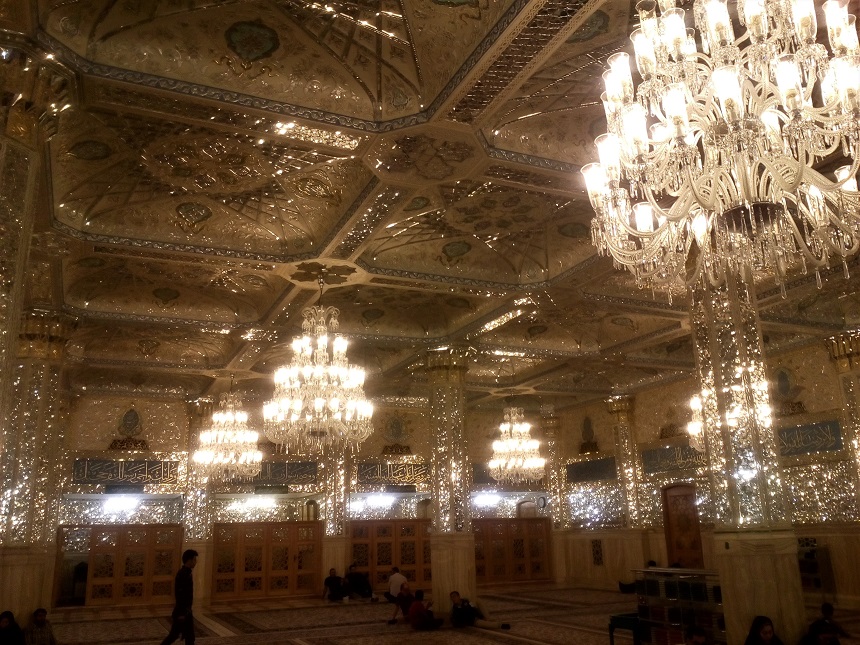
Luxurious Carpets
- The shrine’s floors are covered with exquisite hand-woven carpets, crafted from high-quality silk and wool.
- These carpets feature intricate patterns and designs, often incorporating traditional Persian motifs, such as floral patterns and arabesques.
Golden Domes and Minarets
- The shrine’s golden domes and minarets are a striking feature of its interior design, symbolizing the site’s spiritual significance.
- The domes are often adorned with intricate tilework and calligraphy, adding to the shrine’s majestic beauty.
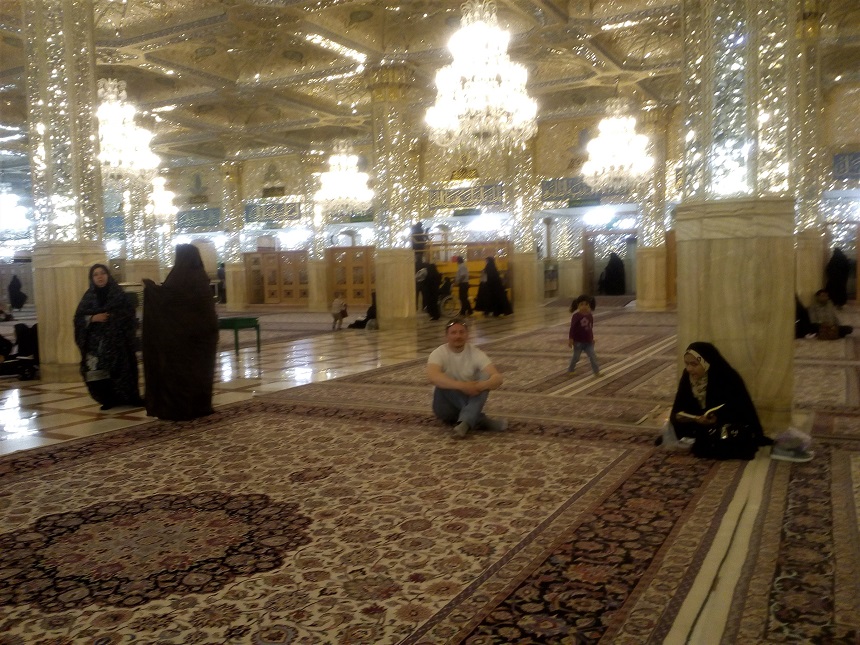
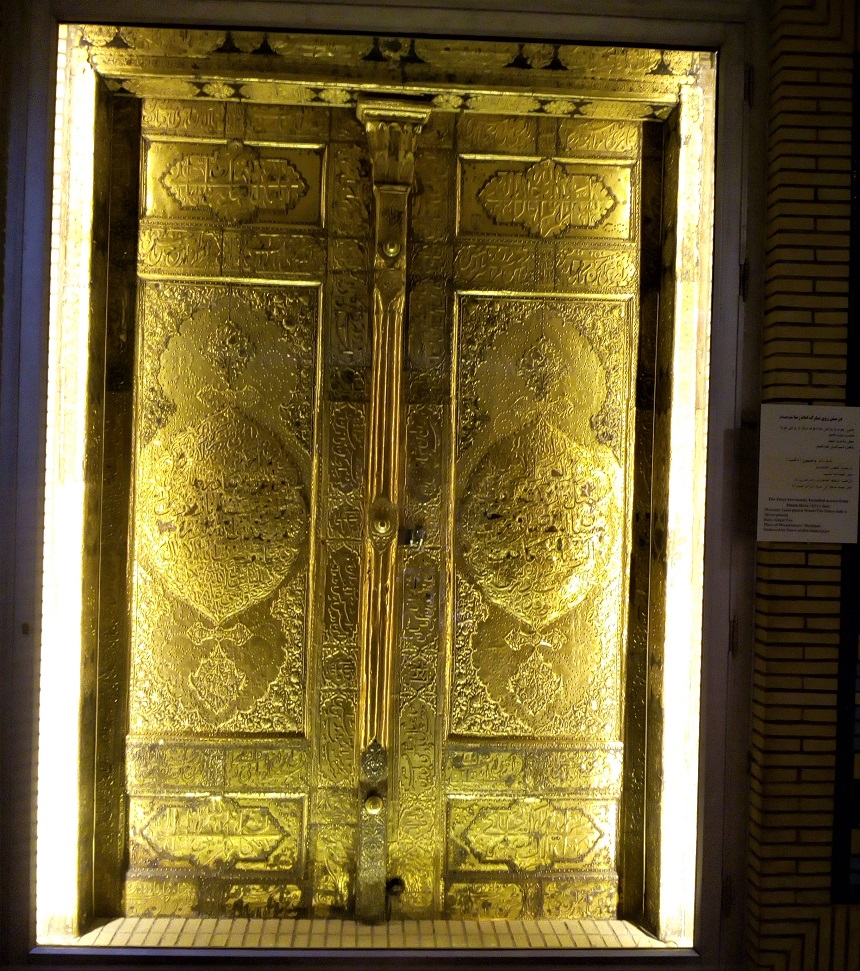
The shrine’s museum and collections feature an impressive array of artifacts, including ceramics, textiles, and other artworks. The shrine’s collection includes exquisite examples of Iranian ceramics, showcasing intricate designs, calligraphy, and glazing techniques. Some pieces may date back to various periods, including the Seljuk, Timurid, or Safavid eras, each with its unique characteristics and artistic styles.

The shrine’s architecture and decorative elements hold deep spiritual and cultural significance, reflecting the rich history and heritage of Iranian-Islamic art. The golden accents and ornate details contribute to the shrine’s breathtaking beauty, making it a revered site for pilgrims.
Here is a short video from the Shrine courtyard
 Frog on the border