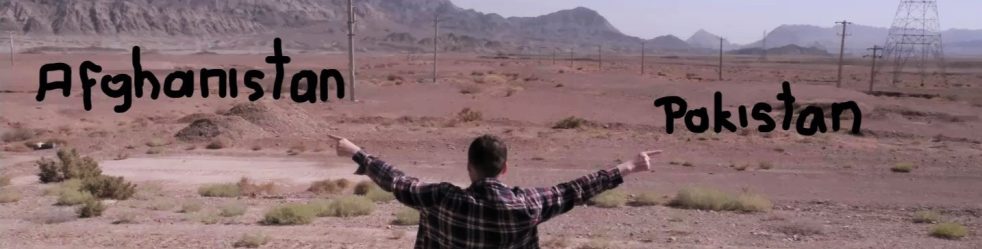
I traveled through Iran independently, seeking the places where the map feels thin. Qeshm Island is one of those places. Here, the “border” isn’t just a line between land and sea; it is a blurring of eras.
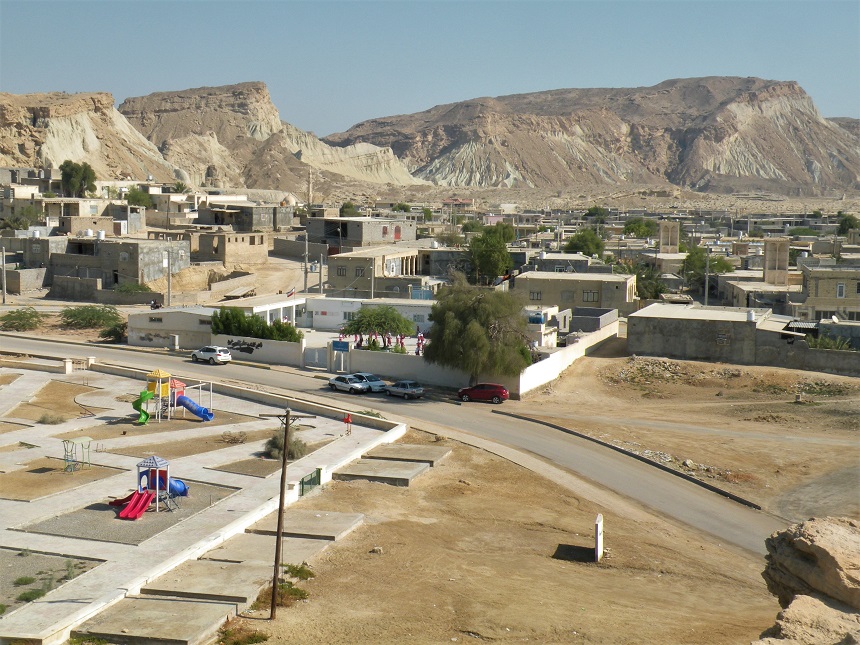
This part of Qeshm Island offers also this military complex dated back to Seljukian Era (3rd century). The castle consisted of four towers and and a rampart gate made of mortar on western side. The remains of Naderi castle and four observation towers are symbols of the historical importance of this port. A nearby cemetery adds to the mystery of this place.
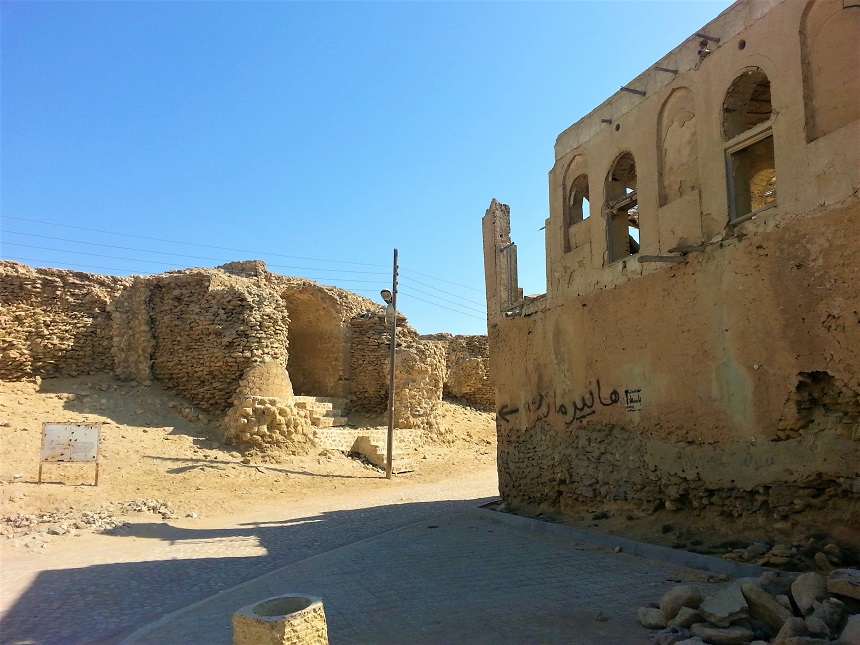
The air in Bandar Laft is thick—not just with the salt of the Persian Gulf, but with the weight of a thousand years of arrivals. Standing at the foot of the Naderi Fortress, you feel the gaze of history. These four crumbling towers, held together by ancient Seljuk mortar and Sarooj, have watched the horizon since the 3rd century, guarding the island’s most precious treasure: fresh water.
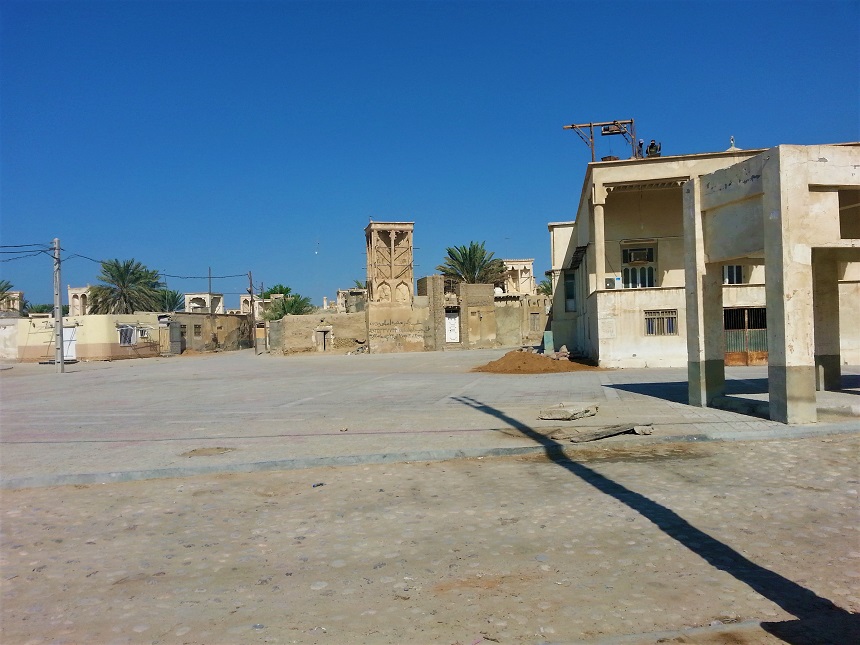
Commonly associated with the 18th-century ruler Nader Shah, the fortress actually rests on foundations much older. The Seljuk-era masonry speaks to a time when this port was a vital artery of the Silk Road’s maritime cousin. The structure consists of four observation towers and a rampart gate on the western side, built to protect the Tala Wells. In this arid landscape, these wells were the difference between a thriving civilization and a ghost town.
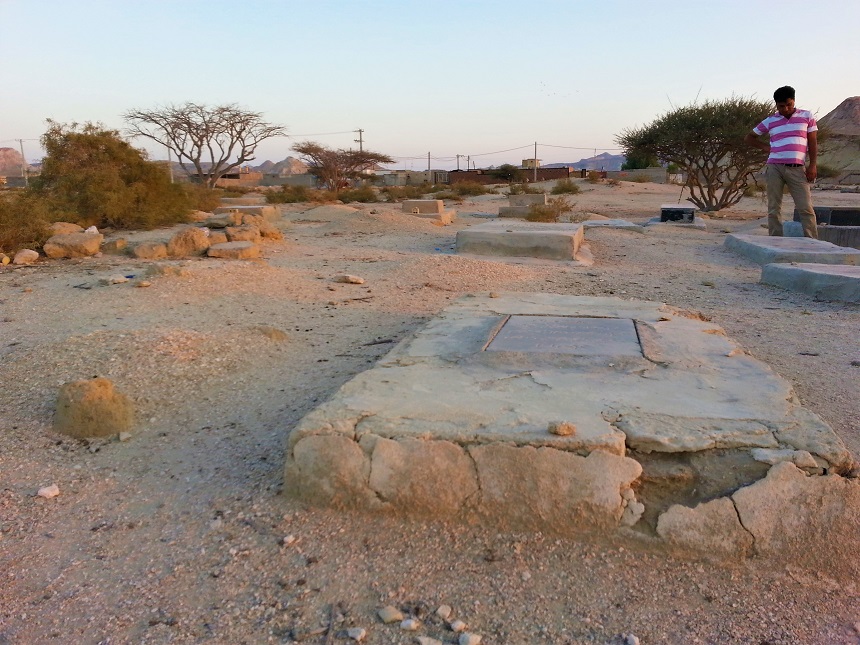
Adjacent to the military precision of the fort lies a world apart: the Qeshm Cemetery. For a traveler accustomed to European graveyards—with their manicured rows, polished marble, and predictable inscriptions—this place is a shock to the system. Here, there is no vanity. There are no soaring angels or boastful epitaphs. Instead, the graves are marked by simple, jagged shards of local limestone that seem to grow organically out of the island’s crust. They look like teeth breaking through the earth.
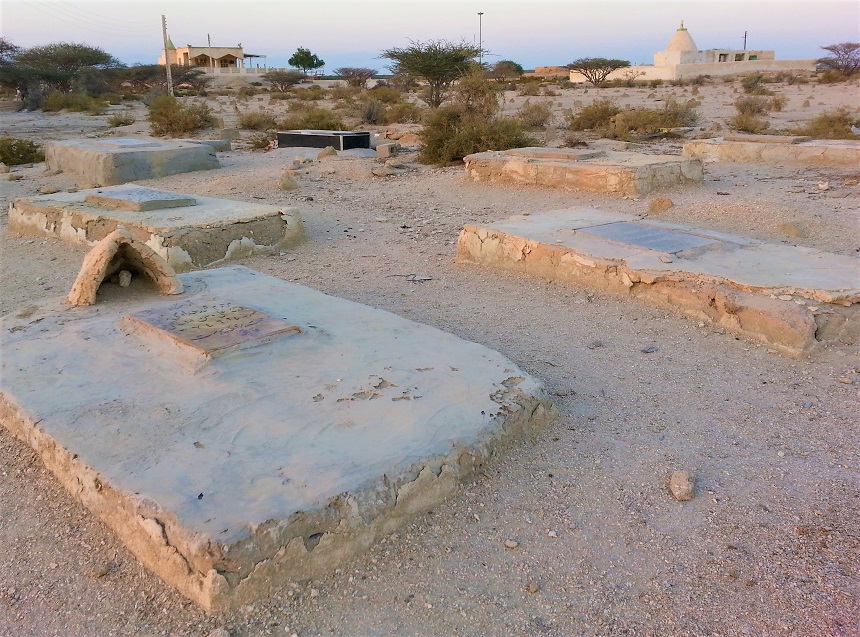
It is a raw, mystical landscape where the names of the dead have long been scrubbed away by the salt-laden winds of the Persian Gulf, leaving only a collective memory of those who once guarded this shore.
During my wandering, I had the rare privilege of being allowed to enter one of the small, domed tomb structures—often referred to as a mausoleum or ziyarat. Stepping through the low threshold, the “boundary” was instantaneous.
The 45°C heat of the Qeshm sun vanished, replaced by a cool, heavy stillness. My eyes adjusted from the blinding white dust to a scene of startling tenderness. Inside, there was a resting bed, but it didn’t feel like a coffin or a shrine to the dead. It was covered with a beautifully crafted duvet, its colors vibrant against the earthen walls, the fabric soft and smelling faintly of rosewater and age.
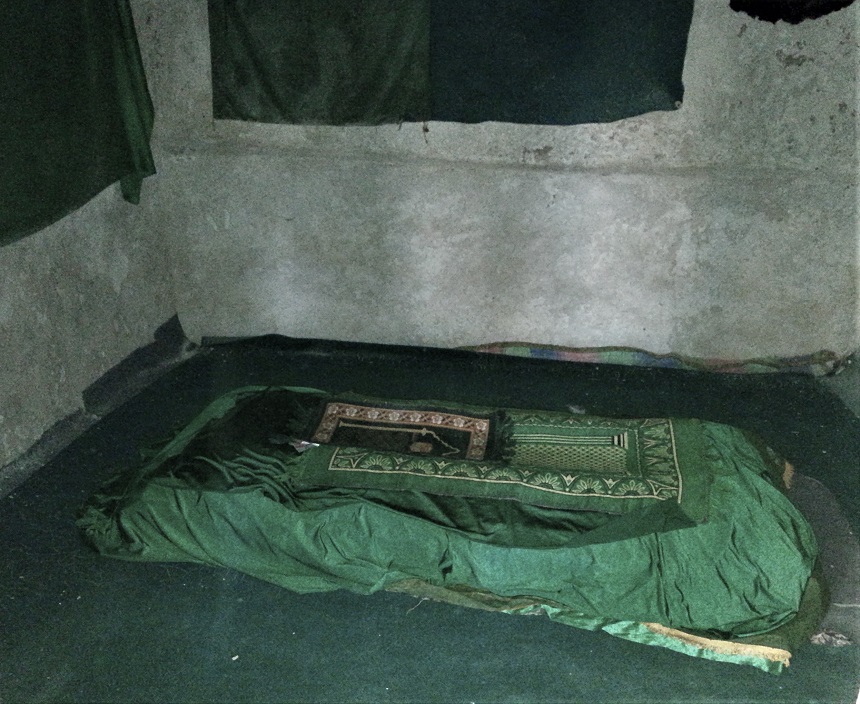
I felt an immediate, Lump-in-the-throat kind of reverence. In the West, we hide our dead behind polished stone and cold metal. But here, in the middle of a barren military outpost, someone had taken the time to “tuck in” the departed. It felt less like a place of finality and more like a room kept perpetually ready for a long-awaited guest who had just stepped out for a moment.
I realized then that the “border” I was crossing wasn’t between life and death—it was between abandonment and remembrance. The fortress outside was built to survive empires, but this small, soft bed was built to survive grief. Architecturally, these domed tombs are unique to the coastal regions of southern Iran. They blend Islamic tradition with local “Bandari” customs. Often, these shrines are dedicated to local saints or respected elders. The presence of the bed and the duvet is a deeply rooted local tradition; it is believed that the soul remains connected to the site, and providing a place of comfort is an act of ongoing devotion (devotional intimacy).

As I descended from the silent, cool sanctuary of the tomb, the transition back into the blinding Qeshm sun was jarring. I was still vibrating from the mystical peace of that embroidered duvet when the silence was shattered.
From the jagged shadows of the Seljuk walls, three figures emerged like spirits of the dust. They weren’t ghosts of the 3rd century, but the very real, very persistent present: an 11-year-old girl with a gaze as sharp as the limestone, a 10-year-old boy, and a small 6-year-old boy trailing behind, his face a map of sun-baked play and hardship.
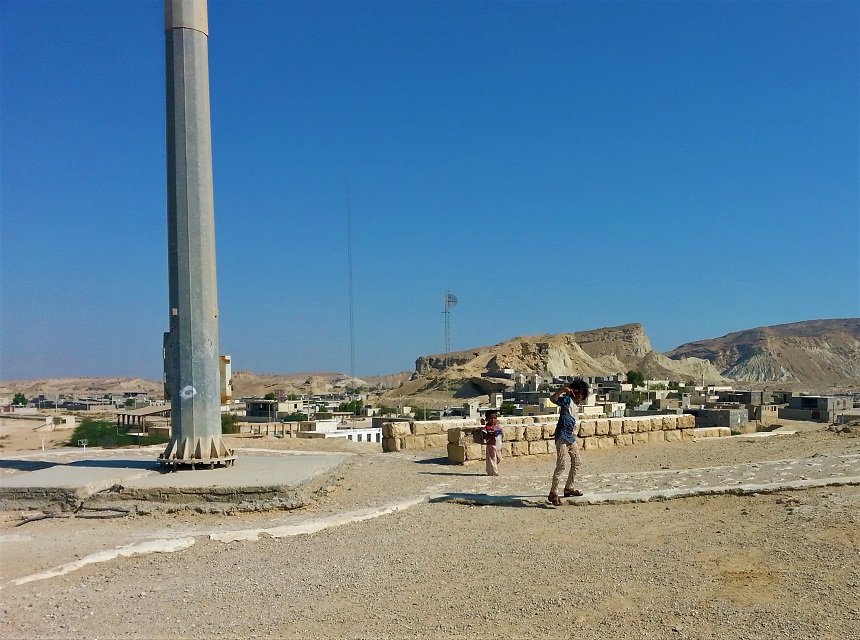
They didn’t see a traveler contemplating the “border between life and death.” They saw a man with a camera and a backpack—a symbol of a world far beyond the salt-crusted shores of Laft.
“Pul! Pul!” (Money! Money!)
Their fingers pointed directly at me, a rhythmic demand that echoed against the ancient ramparts. The 11-year-old girl acted as the commander, her eyes scanning my pockets with a professional intensity. In that moment, the romanticism of the fortress evaporated. This was the “Human Border”—the invisible fence between my world of leisure travel and their world of daily survival.
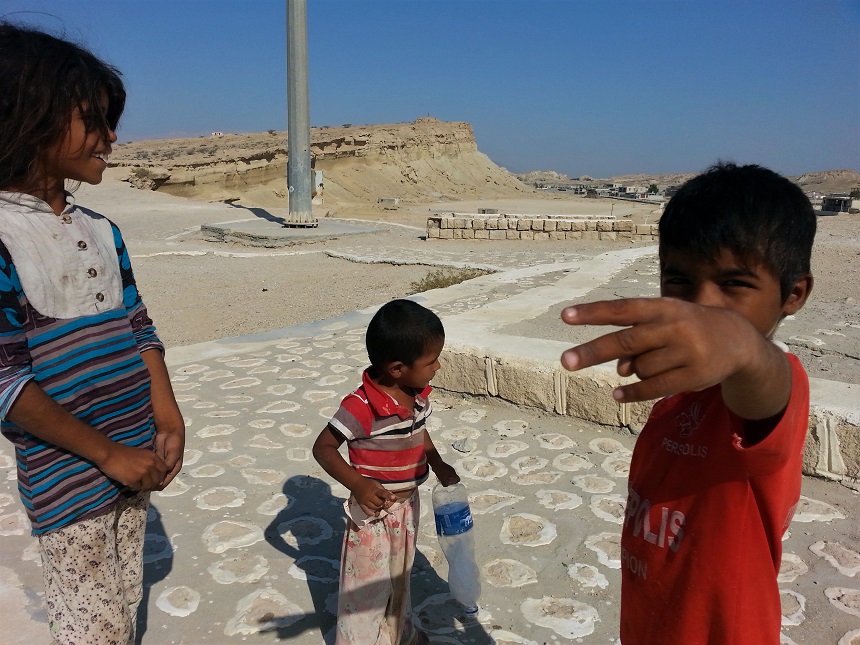
I felt a wave of internal conflict. Part of me wanted to protect the “sanctity” of my historical visit, but another part of me recognized the irony: the very fortress I was admiring was built to protect resources from outsiders. Now, these children were the new gatekeepers, protecting their own territory.
Looking at the 6-year-old, his shirt scruffy and his feet bare against the hot gravel, the “mystical” feeling of the cemetery shifted into something more urgent and grounded. The history of the Seljuks is written in stone, but the history of Qeshm is still being written in the hunger and hope of its children.
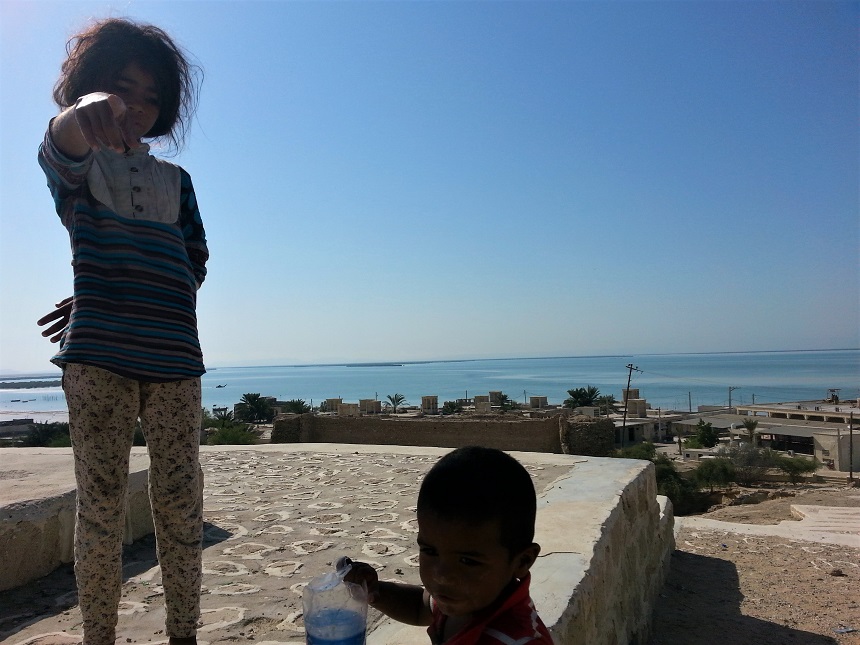
I realized then that to be a Frog on the Border, you cannot just look at the old stones; you have to look into the eyes of the people standing on them. We often want our travel experiences to be “pure,” but the “scruffy” reality is where the true story lives. I wasn’t just a guest of the dead in the tomb; I was a guest of the living in the ruins.
 Frog on the border