Douglas Mawson was a remarkable explorer whose expeditions helped establish the Australian Antarctic Territory. He is also famous for one of the most extraordinary feats of endurance in the history of Antarctic exploration. But Mawson was first and foremost a scientist. Whereas other explorers were driven by a nationalistic urge to claim territory or beat rivals, Mawson’s expeditions were primarily scientific. Their achievements in geology, cartography, meteorology, geomagnetism, and marine biology were groundbreaking.
Mawson’s Hut and its outbuildings remain largely intact and are of national and international heritage significance. They are among just a handful of complexes surviving from the ‘heroic era’ of Antarctic exploration. The timber buildings have suffered from the effects of wind, ice, and time. However, the Australian Antarctic Division and the Mawson’s Huts Foundation have stabilised the remains in recent years.
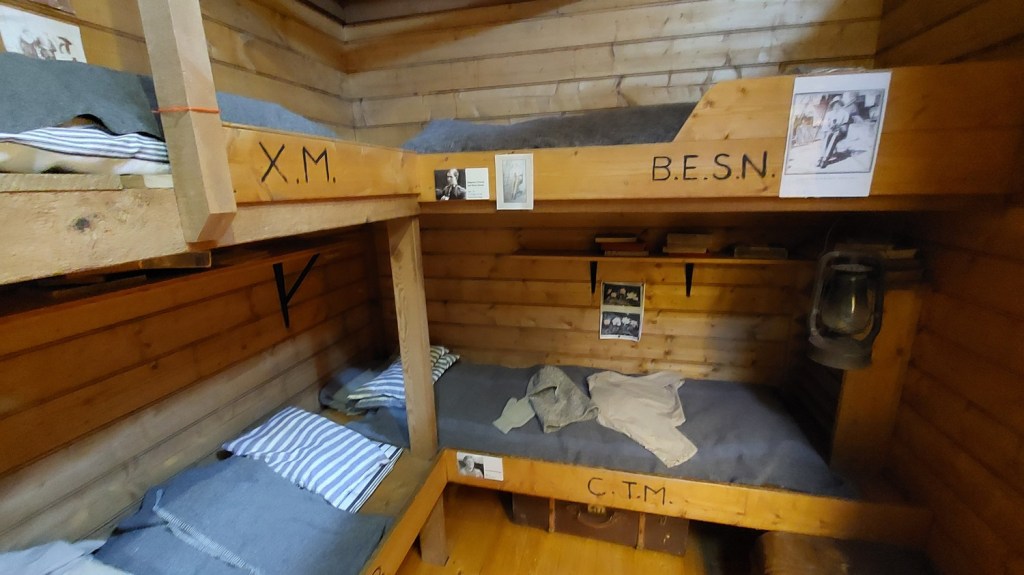
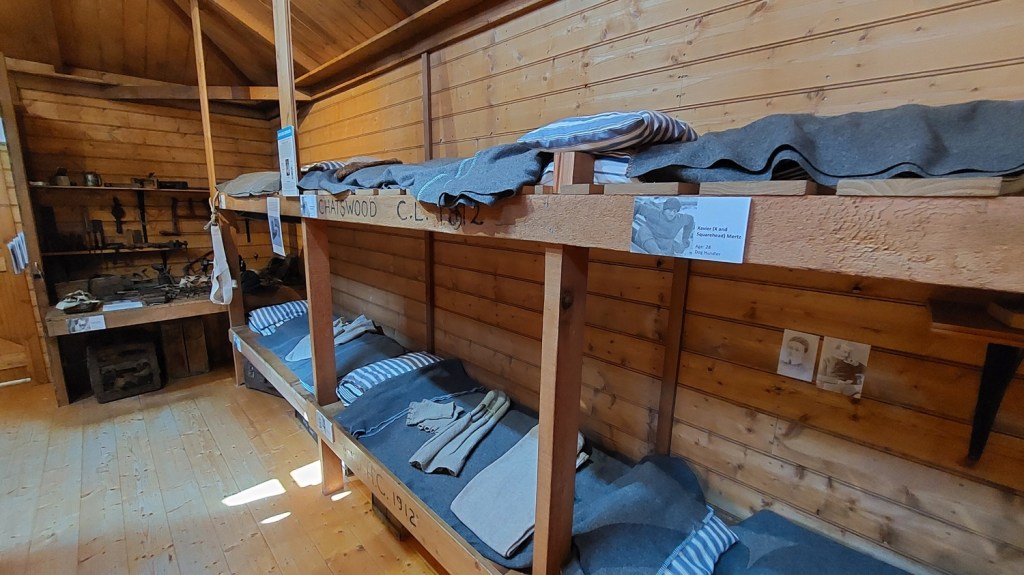
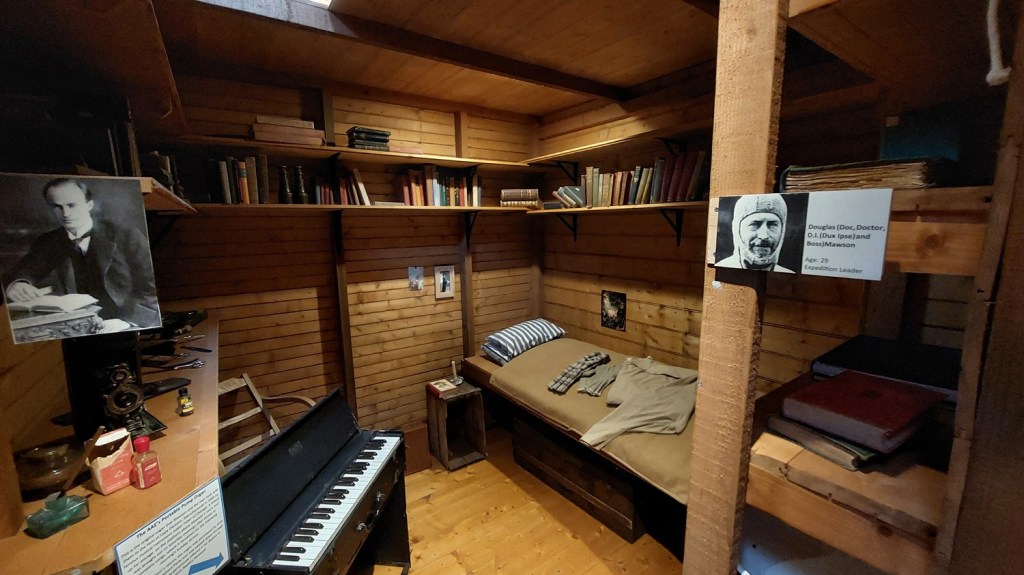
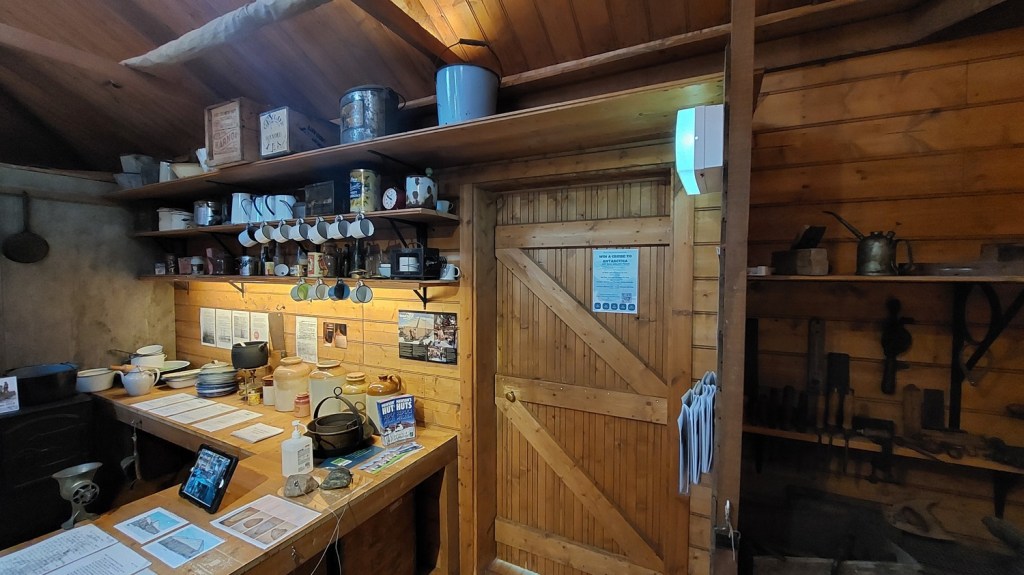
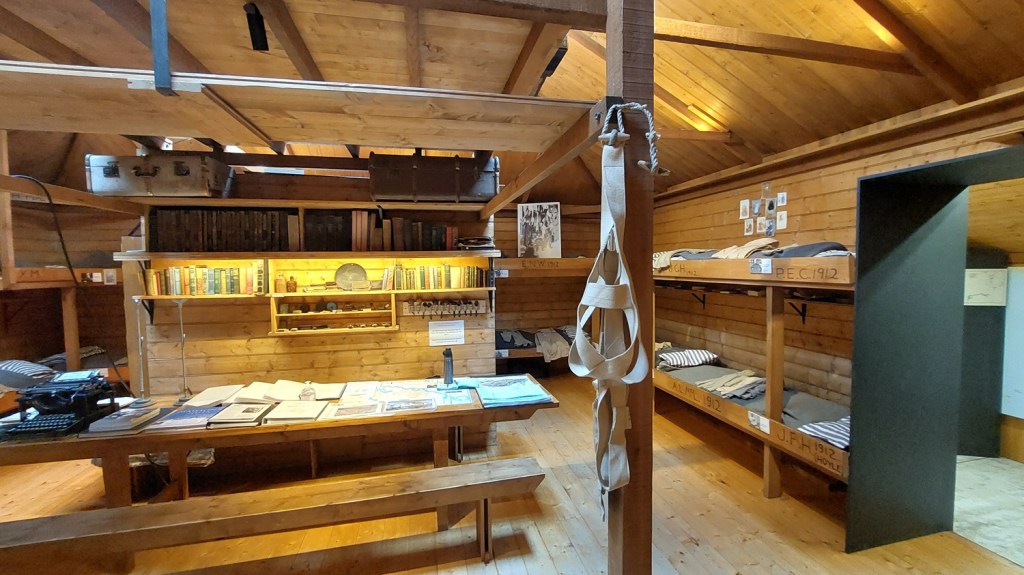
The Mawson’s Huts Replica Museum is the world’s only full-scale copy of a building from the heroic era of Antarctic exploration. Situated on the Hobart waterfront.

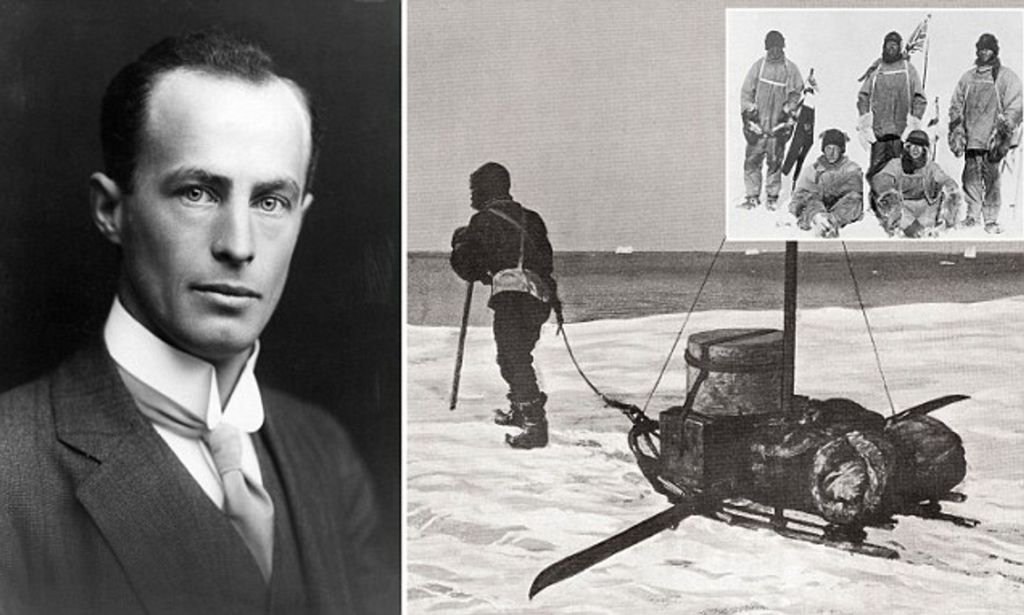
Mawson was born in Yorkshire in 1882 but moved to Sydney with his family when he was two. After studying engineering and geology at university, he conducted geological research in Vanuatu and outback Australia. In 1905, he was appointed lecturer in mineralogy and petrology at the University of Adelaide. Two years later, Mawson met the Antarctic explorer Ernest Shackleton, who was visiting Adelaide on his way south to lead the British Antarctic Expedition (BAE). Shackleton appointed Mawson the expedition’s physicist.
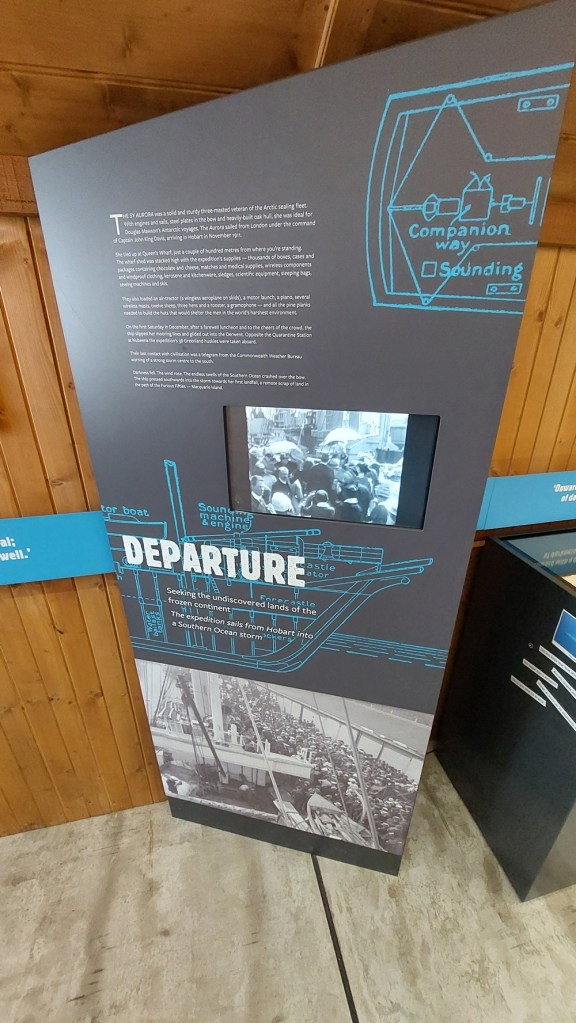

The following year, he trekked 2,028 kilometres to claim the South Magnetic Pole for ‘the British nation’. It was during this gruelling march that he conceived of his own Antarctic expedition. Mawson wanted to carry out a detailed examination of more than 3,000 kilometres of the Antarctic coast and its hinterland due south of Australia. This he intended to do in pursuit of scientific data rather than glory, though as a geologist he was also interested in the discovery of any exploitable mineral resources. Mawson continued to work on his idea for an Antarctic expedition and, while in London in 1910, outlined his plan to Shackleton who suggested they conduct a joint expedition. Shackleton was later forced to withdraw, leaving Mawson to organise and lead what would be an Australian and New Zealand expedition rather than a British one.
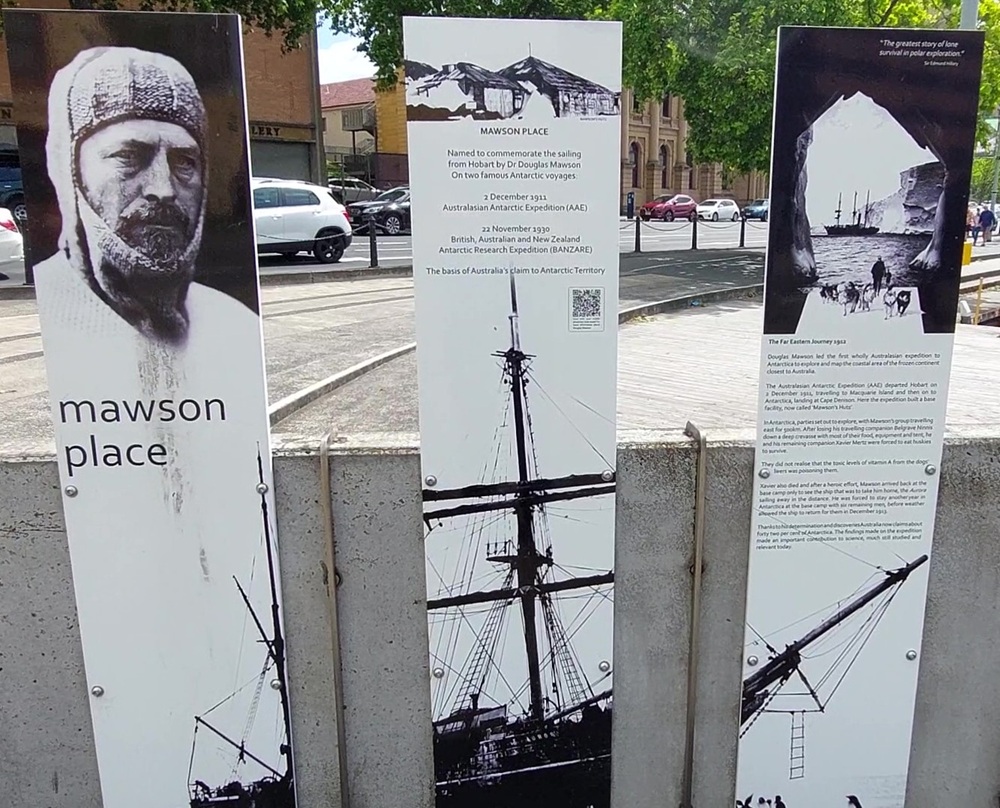
In 1929 and 1930 he organised and led joint Australian, British and New Zealand expeditions to the Antarctic. During this period, he claimed 42% of Antarctica as British sovereign territory. In 1936 sovereignty was transferred to Australia, resulting in the creation of the Australian Antarctic Territory.

Mawson’s abhorrence of the indiscriminate seal and penguin slaughter he witnessed on Macquarie Island during his 1930 expedition informed his advice to the Tasmanian Government to declare the island a wildlife sanctuary. He passionately lobbied for the federal government to undertake regular Australian Antarctic expeditions, which continue to this day. Mawson died in 1958.
Source: National Museum of Australia.
A glimpse into Mawson’s Hut here
 Frog on the border