
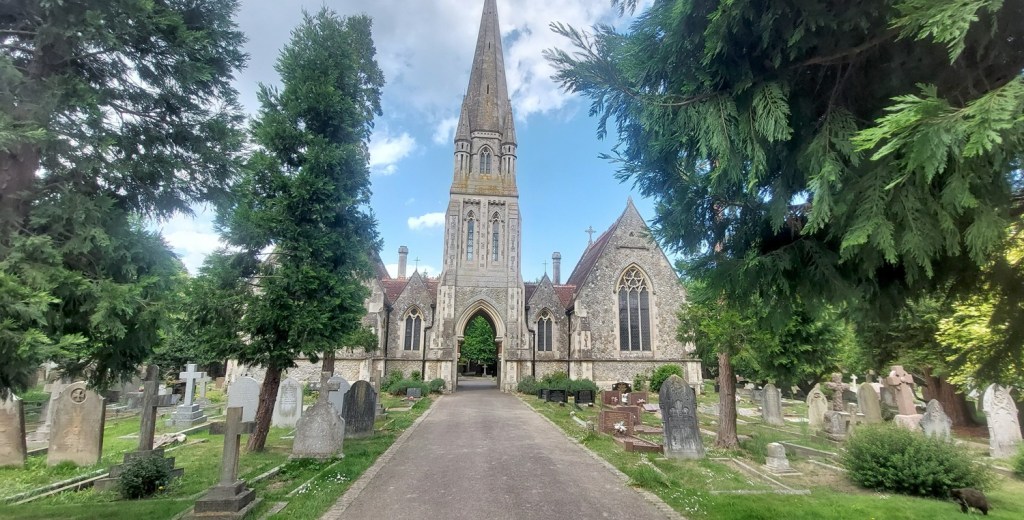
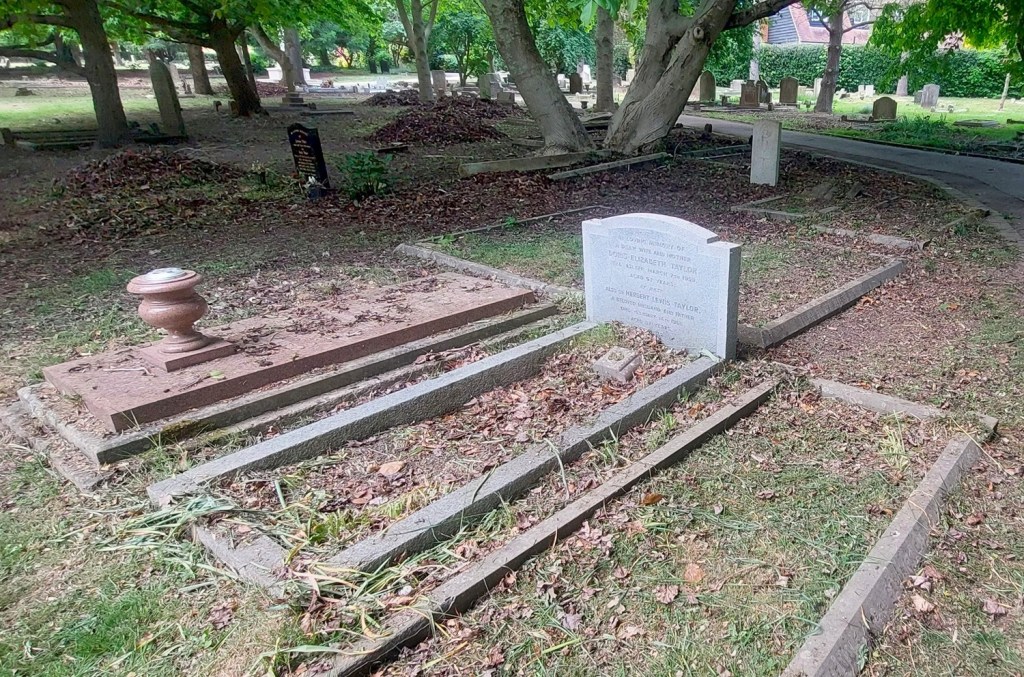
I recently visited Canterbury City Cemetery, a historic and serene resting place for many notable figures, including the renowned author Joseph Conrad. As I walked through the tranquil grounds, I paid my respects to Conrad and discovered the diverse stories of those buried there, reflecting the rich history and cultural heritage of the area.
As I stood before Joseph Conrad’s tombstone, I reflected on the remarkable journey of this Ukrainian-born writer, whose Polish heritage and British citizenship influenced his work, transporting readers to far-flung corners of the world. What struck me most was the remarkable feat he achieved as a writer. Born Józef Teodor Konrad Korzeniowski in 1857, Conrad didn’t learn English until his early twenties, yet he went on to become one of the greatest writers in the language. His mastery of English is all the more astonishing given that it wasn’t his native tongue.

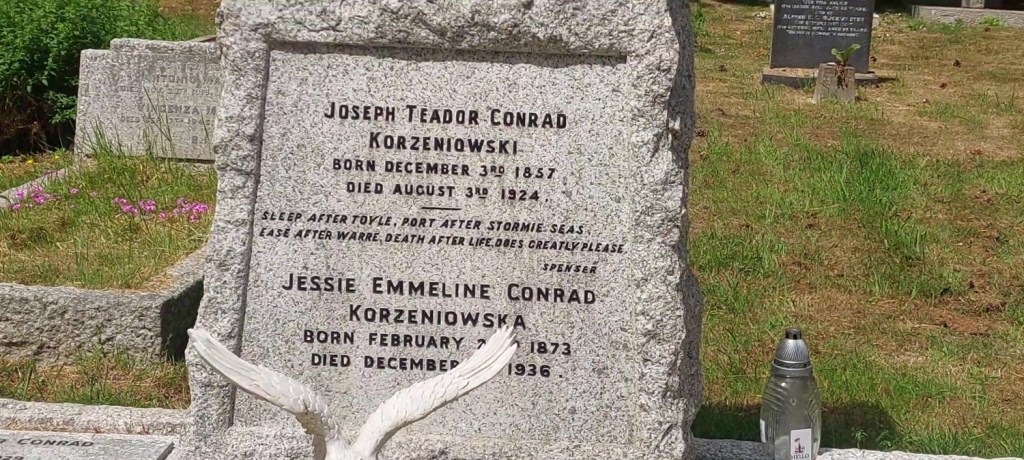
Works like “Heart of Darkness” and “Lord Jim” showcase his unique perspective and linguistic skill, as if the English language was always a part of him. Conrad’s writing is characterized by its nuance, complexity, and depth, a testament to his dedication to his craft.
Did you know that Conrad was a naturalized British citizen, having served in the British Merchant Navy and later becoming a British subject in 1886?
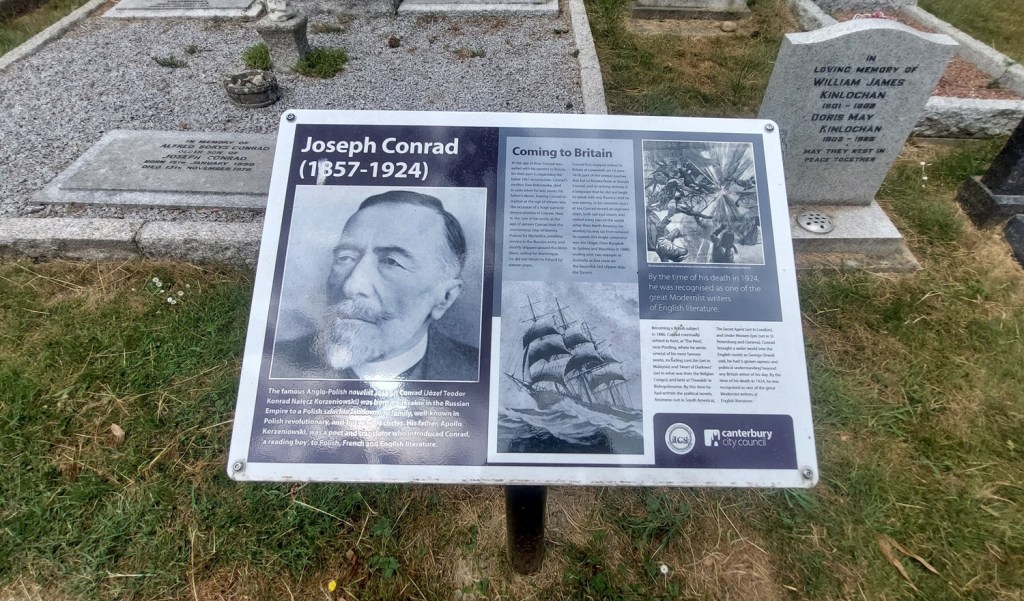

As I gazed at the inscription on his tombstone, I couldn’t help but marvel at the impact of his work. His experiences as a sailor and his observations of human nature are woven into narratives that continue to captivate readers worldwide. Conrad’s legacy is a powerful reminder that language can be a tool of extraordinary beauty and precision, even in the hands of those who acquire it later in life.

The cemetery where Conrad is buried, Canterbury City Cemetery, is the final resting place for many notable figures. I noticed the graves of other prominent individuals nearby, including Sir Edwin Arnold, a British poet and journalist, and W.H. Hudson, a naturalist and writer. The peaceful surroundings seemed a fitting tribute to these literary figures, their works continuing to inspire and educate generations.
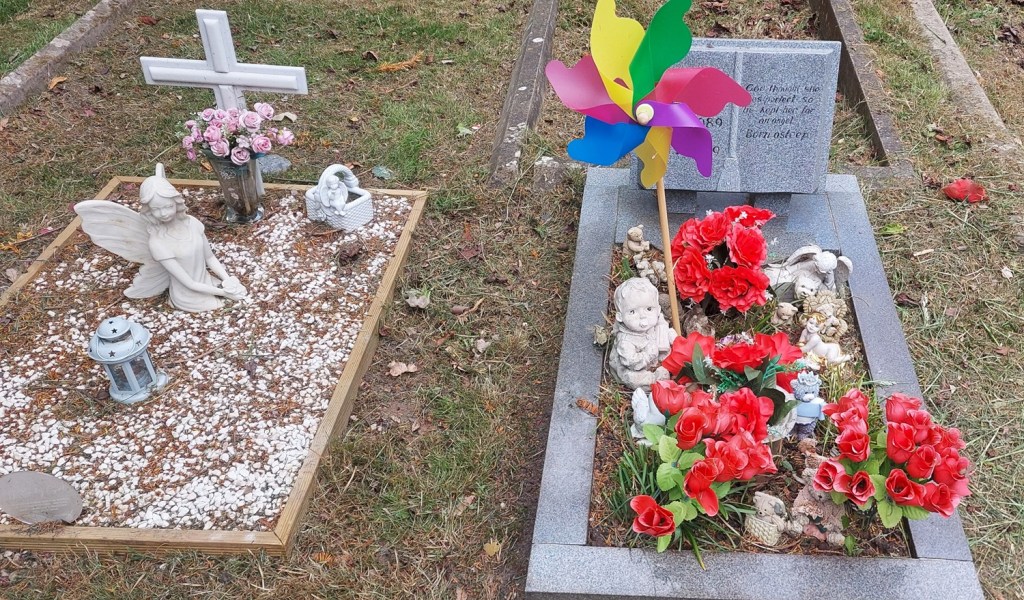
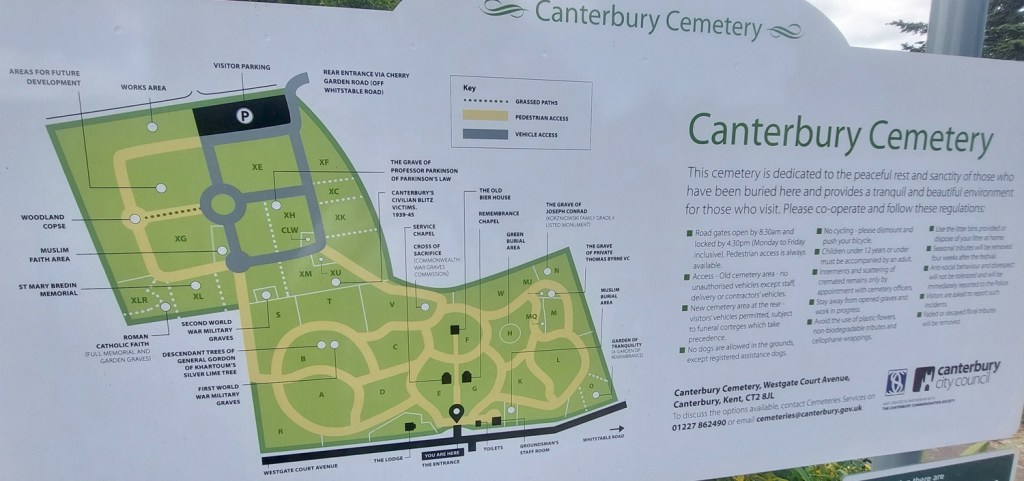
Canterbury City Cemetery is a resting place for people of various backgrounds and faiths. While I couldn’t find specific information about Muslim graves, the cemetery does accommodate different burial needs.
Here are some interesting facts about the cemetery:
- Multi-Faith Facilities: The cemetery has chapels with facilities for all faiths, indicating an effort to cater to diverse religious needs.
- Green Burials: They offer eco-friendly burial options using biodegradable materials, which might appeal to those from various cultural backgrounds.
- War Graves: The cemetery contains graves of war victims, including those from World War I and II, with a Cross of Sacrifice monument.
- Notable Burials: Some notable individuals buried there include:
- Joseph Conrad, a Polish-born writer who became a British citizen
- Thomas Byrne VC, a recipient of the Victoria Cross for his bravery in the Sudan
- Cecil Northcote Parkinson, a writer famous for “Parkinson’s Law”
- Harry Bloom, a South African journalist and writer who challenged apartheid

Here is a short video of my visit
 Frog on the border