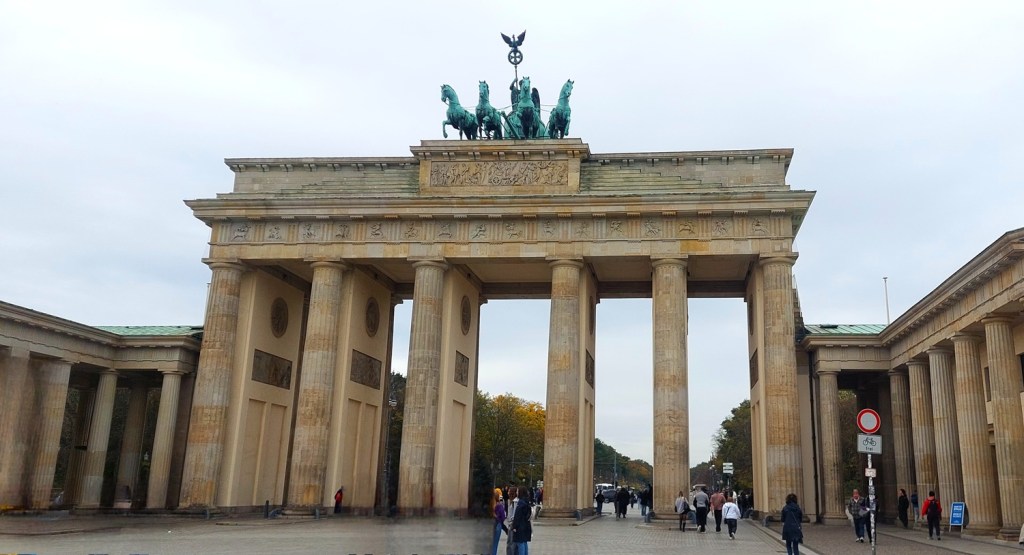
Stepping into the vibrant city of Berlin, the first landmark I set out to visit was the iconic Brandenburg Gate. This majestic structure has become an enduring symbol of the city, and I was eager to experience its grandeur firsthand.
The Brandenburg Gate is an 18th-century neoclassical monument in Berlin, Germany, that’s steeped in weird and wonderful history. Designed by Carl Gotthard Langhans and built between 1788 and 1791, this iconic gate was inspired by the Propylaea in Athens and features a bronze quadriga sculpture of a chariot drawn by four horses, which was initially meant to represent the Greek goddess of peace, Eirene, but was later rebranded as Victoria, the Roman goddess of victory. What’s really wild is that the quadriga was carted off to Paris by Napoleon after he defeated the Prussians, and it wasn’t returned until 1814. Today, the gate stands as a powerful symbol of German reunification and unity, and its grandeur is matched only by the bizarre and turbulent history that surrounds it.
Did you know that the Brandenburg Gate was originally built as a symbol of peace, commissioned by King Frederick William II of Prussia in 1789? The gate’s design was meant to represent the gateway to peace. It wasn’t until much later, during the Cold War era, that the gate became a powerful symbol of division and reunification.
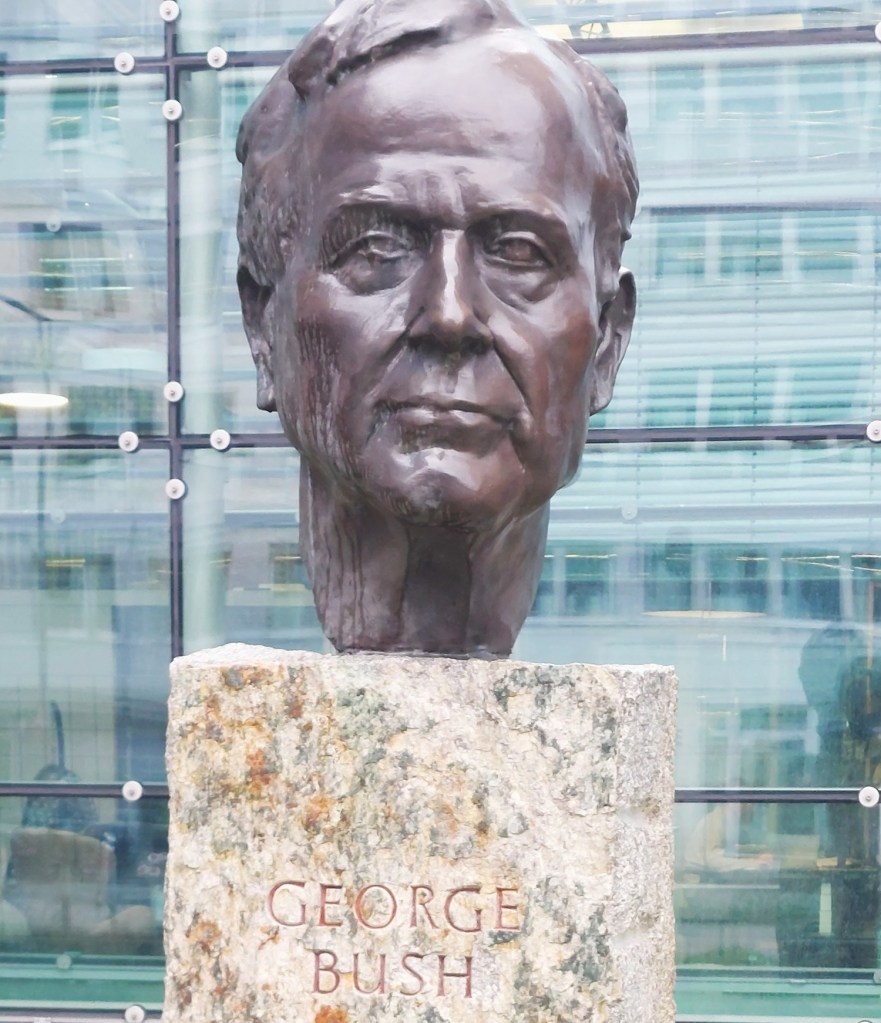
From the Brandenburg Gate, I walked through the heart of the city, taking in the rich history and culture that seemed to seep from every stone. My next stop was the Axel Springer building, where I stumbled upon a unique tribute to three world leaders who played a crucial role in shaping the course of history. In front of the Axel Springer building, I found the busts of Helmut Kohl, Mikhail Gorbachev, and George H.W. Bush, serving as a reminder of their instrumental roles in bringing about German reunification and the end of the Cold War. Kohl, the German Chancellor, worked tirelessly to reunify the country, while Gorbachev’s reforms and diplomatic efforts paved the way for a new era of cooperation. Meanwhile, Bush’s steady leadership and diplomatic approach helped to ensure a peaceful transition.
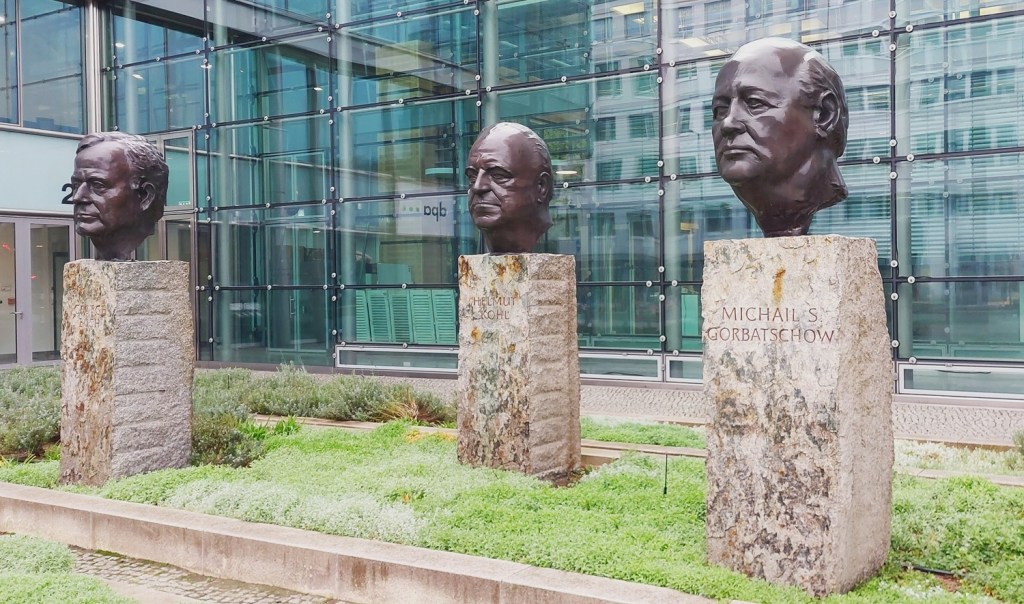
Gorbachev, Kohl, and Bush: Key Players in the Fall of the Berlin Wall
- Mikhail Gorbachev (Soviet Union): Gorbachev’s reforms, such as glasnost and perestroika, created an environment that allowed Eastern European countries to pursue democratic changes. He didn’t directly cause the Berlin Wall’s fall, but his policies emboldened reformers and weakened the East German government.
- Helmut Kohl (West Germany): Kohl’s government supported East German protesters and provided economic aid. He played a crucial role in navigating the reunification process, working closely with Gorbachev to ensure a peaceful transition.
- George H.W. Bush (United States): Bush took a cautious approach, avoiding direct intervention but supporting democratic movements. He maintained a close relationship with Gorbachev, which helped prevent Soviet intervention during the reunification process.
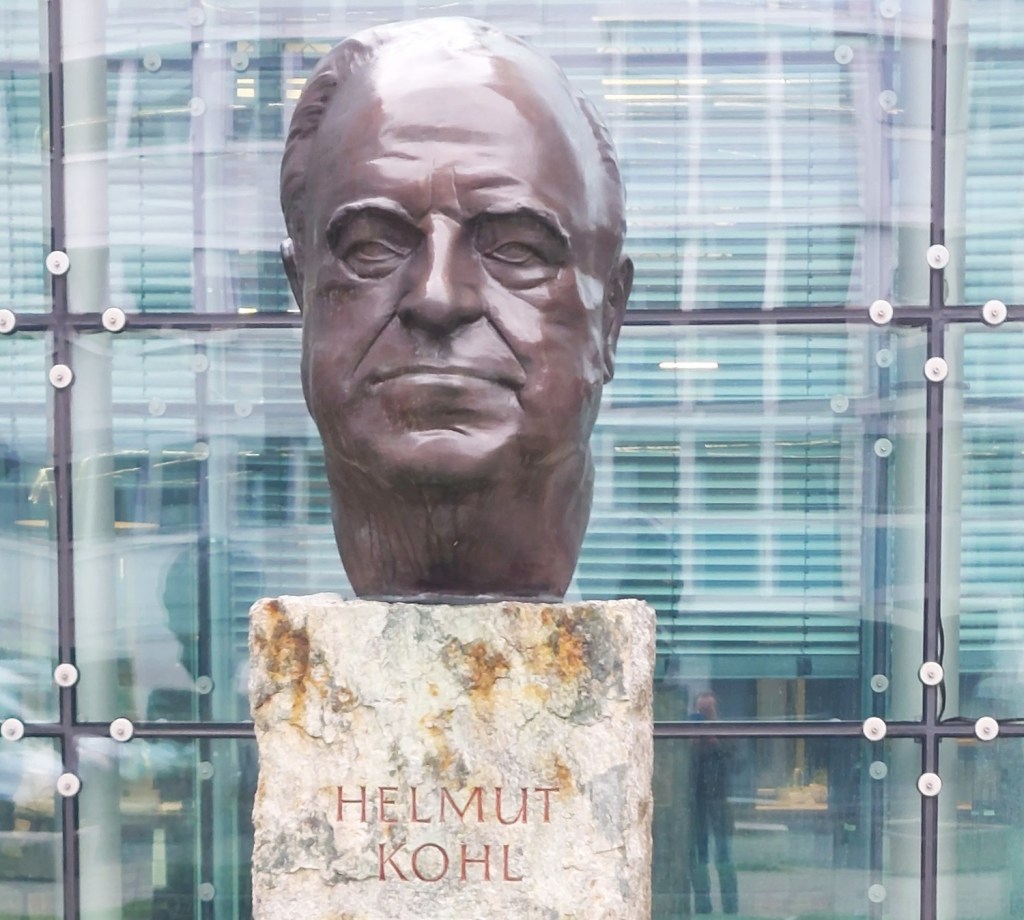
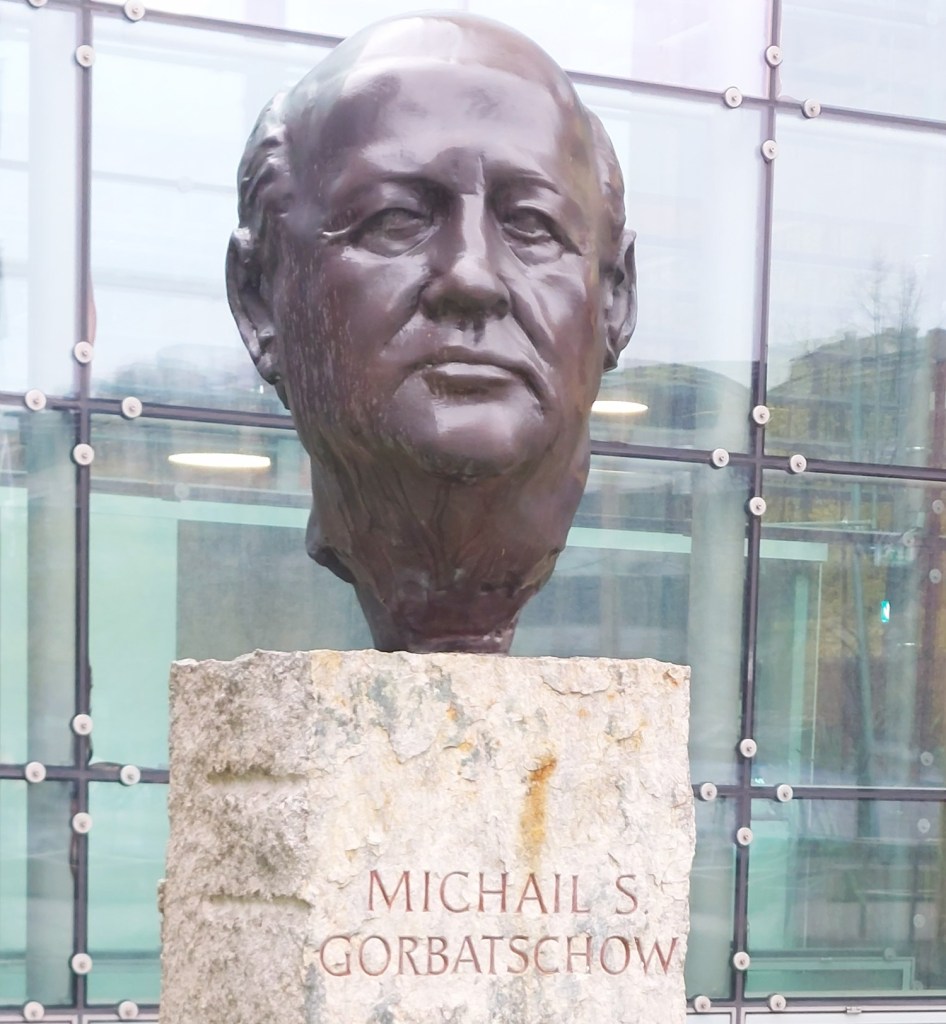
As I walked along the remaining sections of the Berlin Wall, I was struck by the stark contrast between the heavily fortified wall and the vibrant city life surrounding it. The wall once stretched over 155 kilometers, dividing the city from 1961 to 1989. Today, only a few sections remain, including the one near the German Spy Museum. This particular section is a popular spot for tourists and locals alike, serving as a poignant reminder of the struggles faced by those who lived under communist rule. Other notable sections can be found at the East Side Gallery, Bernauer Strasse, and the Berlin Wall Memorial at Bernauer Strasse. The wall was largely destroyed in the years following its fall, with many sections being torn down or sold for souvenirs.
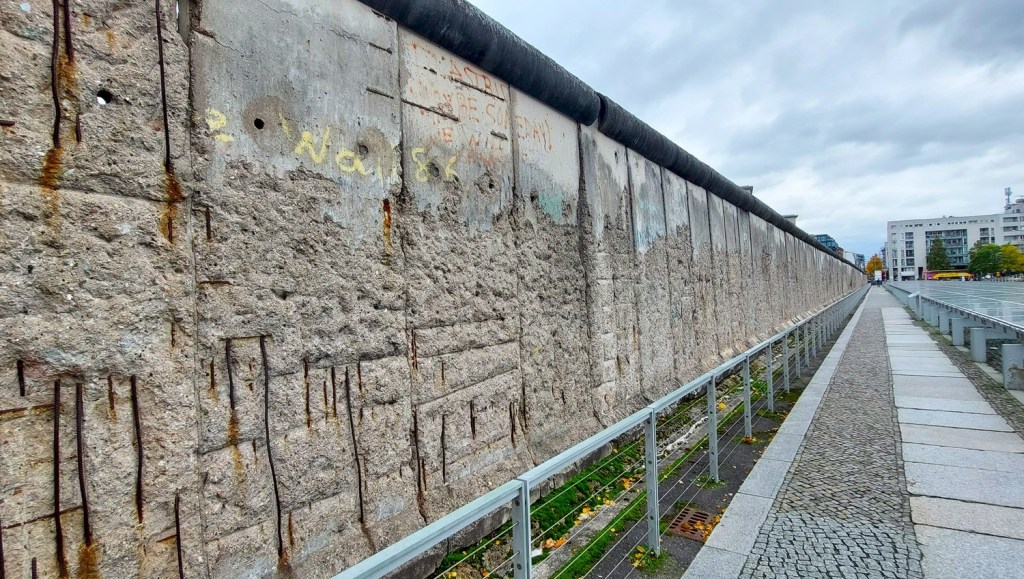
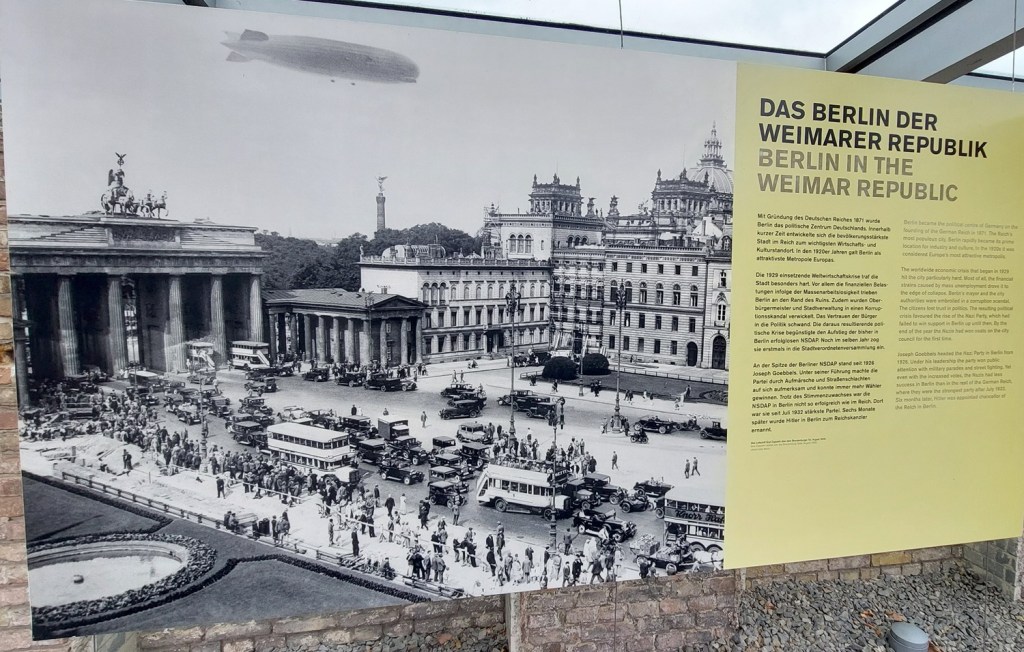
Near the Topography of Terror museum, I came across another significant section of the wall, which now hosts an outdoor exhibition. This museum is located on the site of the former Gestapo headquarters, and the adjacent wall section provides a haunting backdrop for the exhibition. The exhibition itself offers a glimpse into the history of the wall and its impact on the city.

Checkpoint Charlie: More Than Just a Crossing Point
As I approached Checkpoint Charlie, I was struck by the stark contrast between the heavily fortified wall and the now-iconic sign reading “You are now leaving the American sector.” This former border crossing point was a powerful symbol of the division between East and West Berlin during the Cold War.
Did you know that Checkpoint Charlie was the most well-known border crossing point, but not the most frequently used? That distinction belonged to Checkpoint Friedrichstraße, which saw millions of East Germans pass through on their way to work in West Berlin.
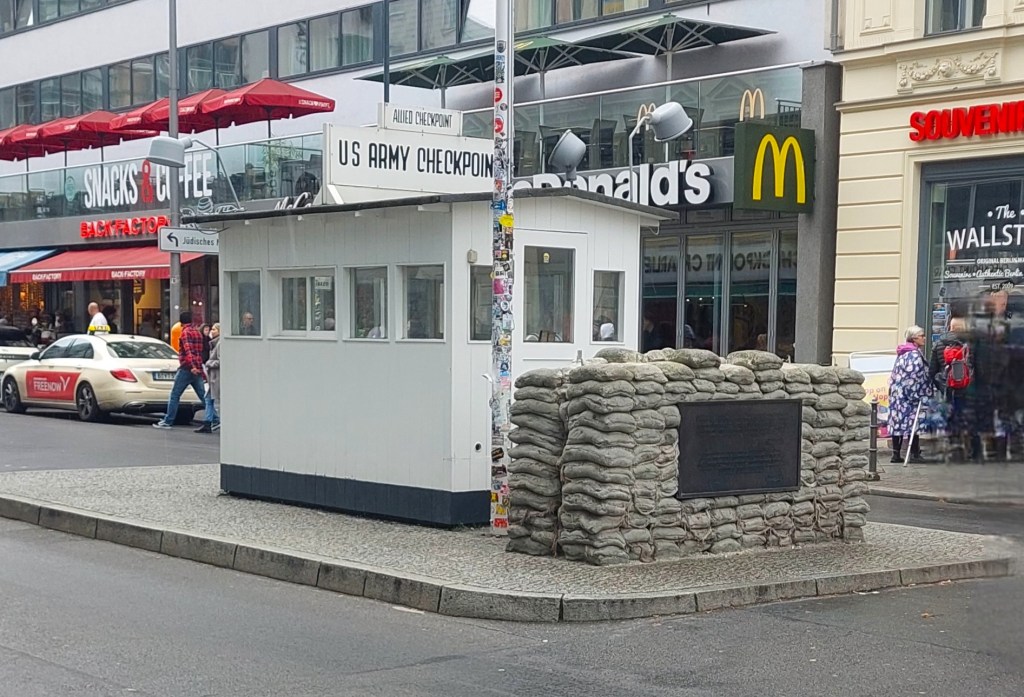
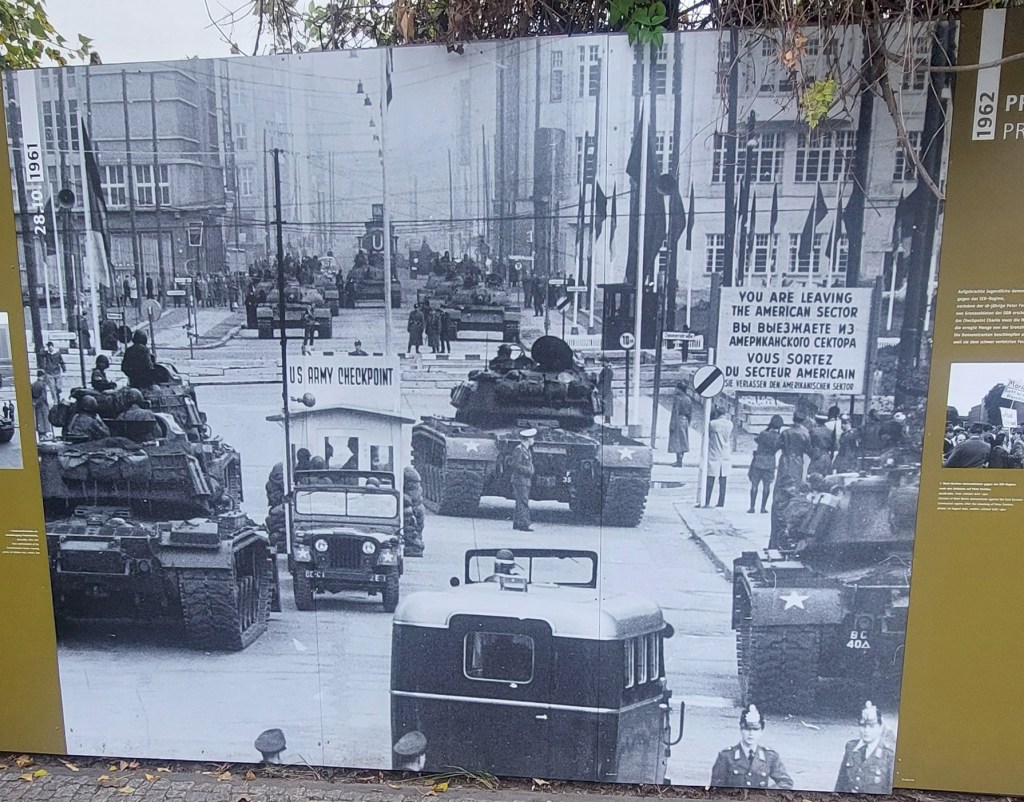
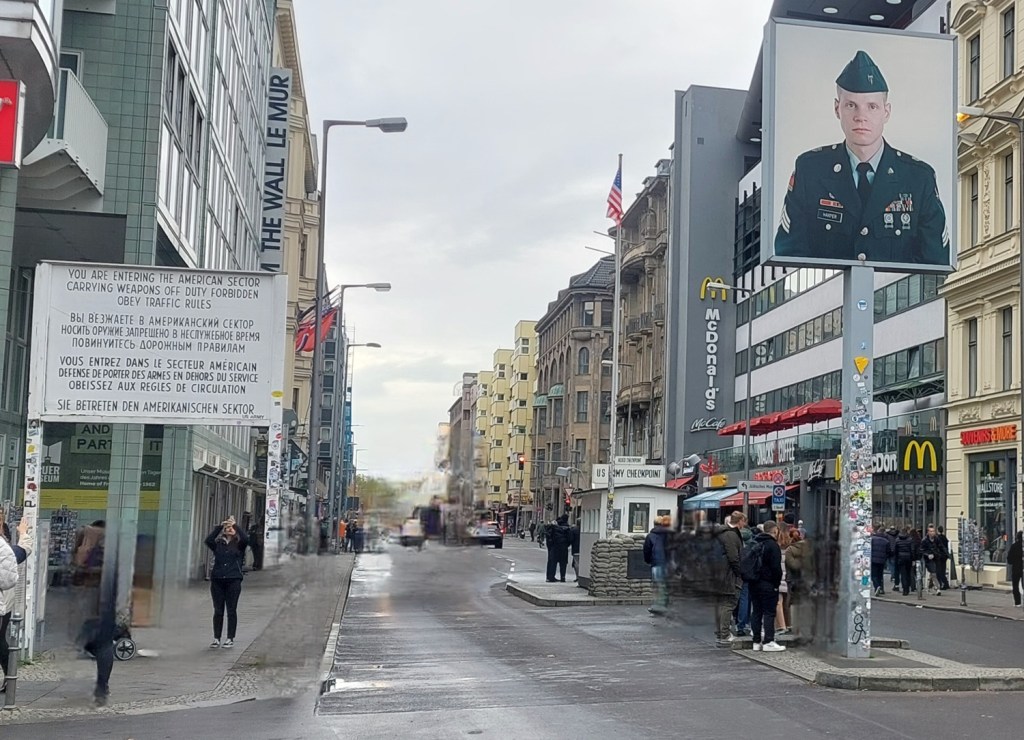
Name Origin: Checkpoint Charlie’s name came from the NATO phonetic alphabet, where “C” is represented by “Charlie.” The checkpoints on the American side were designated with letters, and this was the third checkpoint, hence “Checkpoint Charlie.”
Last Checkpoint Standing: Checkpoint Charlie is one of the few checkpoints that remained open after the wall’s construction, and it’s the most famous one. It became a symbol of the Cold War and the division between East and West Berlin.
Escape Attempts: Many people attempted to cross the border at Checkpoint Charlie, often in daring and creative ways. Some tried to tunnel under, while others attempted to fly over or even jump over the wall.
Museum and Memorial: Today, Checkpoint Charlie has a museum and a memorial dedicated to those who lost their lives trying to cross the border. The museum showcases the history of the wall and the checkpoint.
Replica of the Guardhouse: The original guardhouse was removed in 1991, but a replica was built in 2000. It serves as a popular tourist spot and a reminder of the checkpoint’s significance.
Freedom Bell: In 2009, a replica of the Liberty Bell was installed near Checkpoint Charlie to commemorate the 20th anniversary of the fall of the Berlin Wall. The bell is a symbol of freedom and unity.
Mauersegler (Wall Pioneers): Checkpoint Charlie was also a spot where “Mauersegler” (wall pioneers or wall jumpers) would often attempt to cross the wall. Some succeeded, while others were caught or injured.
The German Spy Museum: A Fascinating Look into the World of Espionage
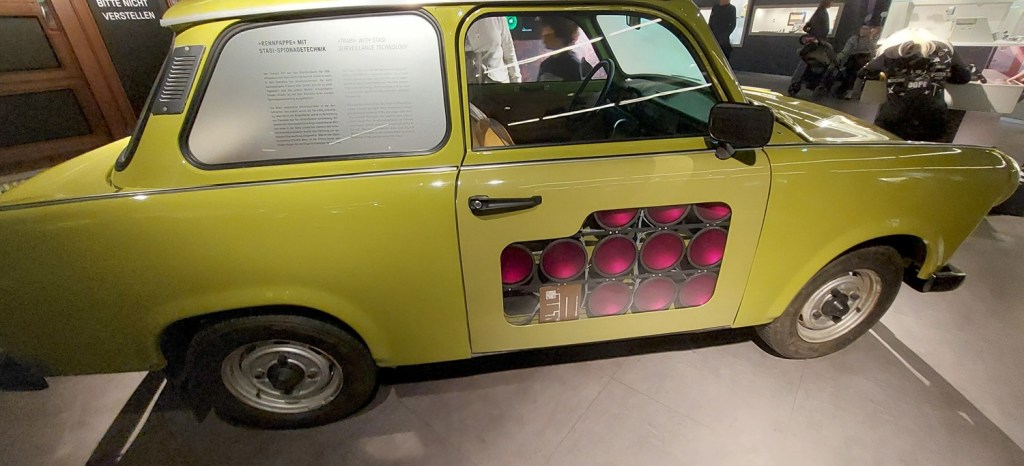
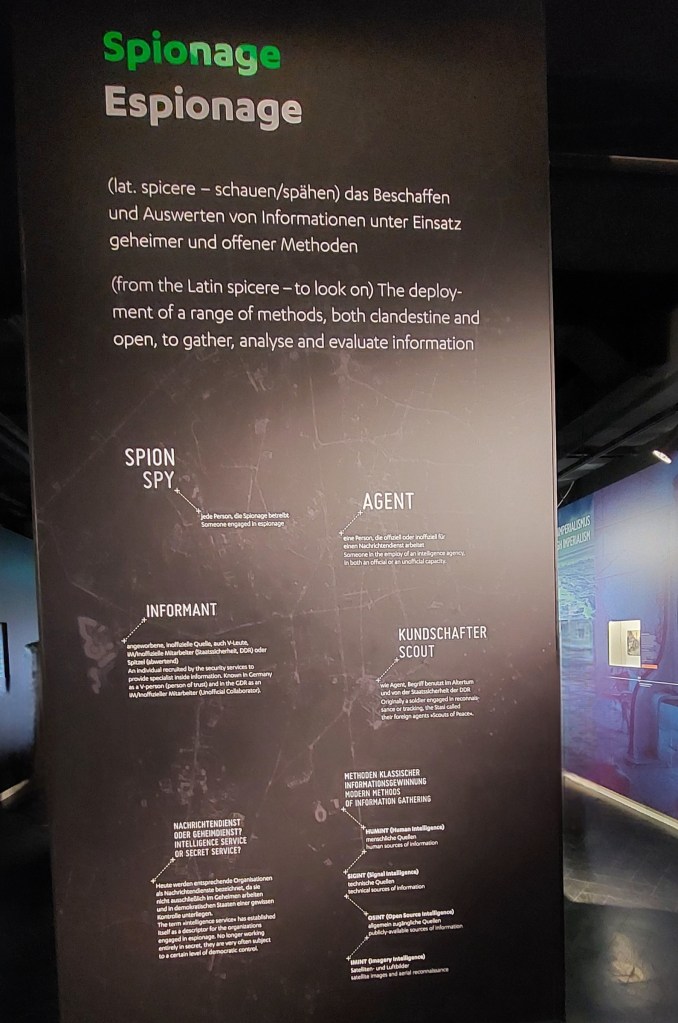
The German Spy Museum was a treasure trove of information about the world of espionage. I was amazed to learn that spying has been a part of human history for thousands of years, with evidence of espionage dating back to ancient civilizations such as Egypt and Greece. In ancient times, spies used various methods, including hidden messages on wax tablets and secret ink. During the Middle Ages, spies used complex codes and ciphers to transmit information. The museum’s exhibits showcased a range of spy gadgets, codes, and techniques, offering a glimpse into the secret world of espionage. One of the most striking exhibits was a gun that shot Archduke Franz Ferdinand, sparking World War I. The museum’s vast collection highlights the evolution of espionage and its impact on world events.
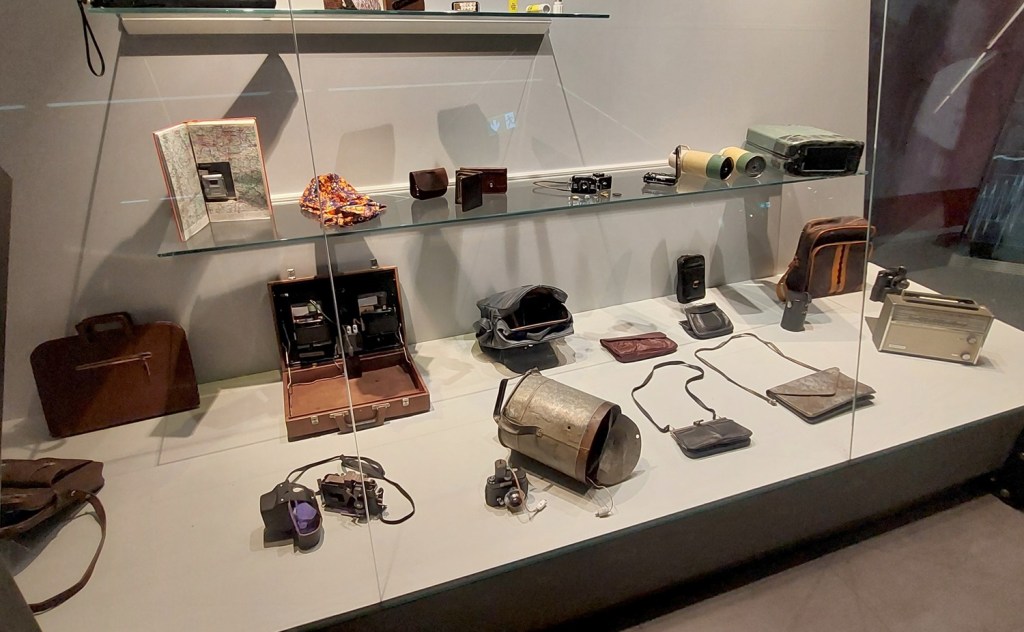
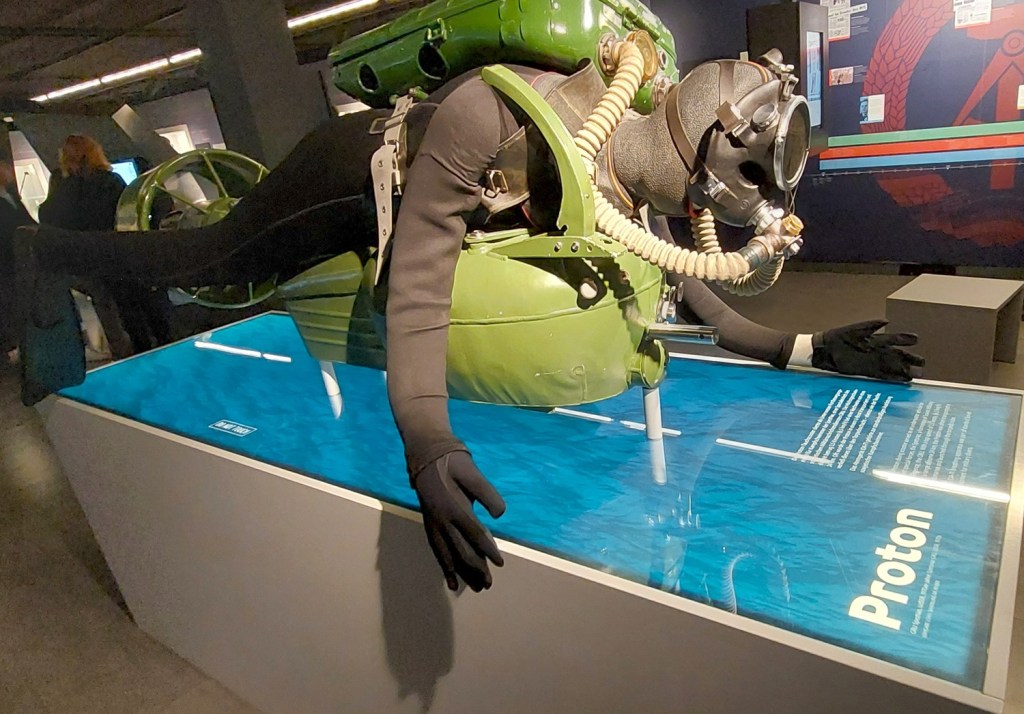

The German Spy Museum in Berlin features an exhibition on Mata Hari, the famous Dutch exotic dancer and courtesan who worked as a spy during World War I. She was born Margaretha Geertruida MacLeod in the Netherlands in 1876. She was a dancer and courtesan who performed in Paris and other European cities, becoming a famous and exotic figure. During World War I, she was accused of being a spy for Germany, and she was executed by firing squad in France in 1917. Her execution was widely reported in the press, and she became a symbol of female espionage and seduction.

One of the most striking exhibits that caught my eye was the pistol used by Gavrilo Princip to assassinate Archduke Franz Ferdinand of Austria in Sarajevo on June 28, 1914. The event sparked the outbreak of World War I, and the pistol, a FN Model 1910, is a chilling reminder of the impact of espionage and assassination on world history.
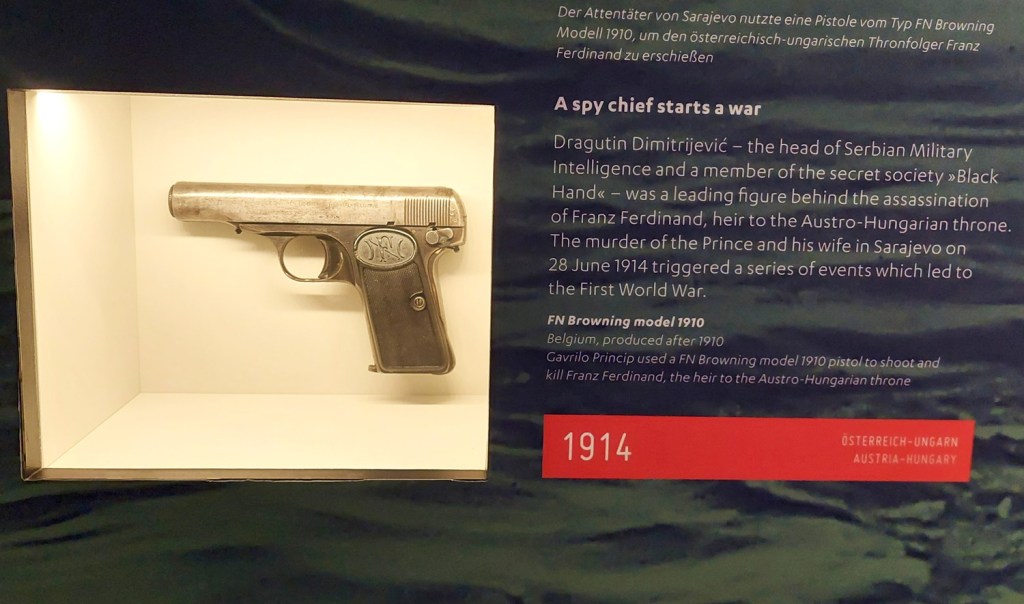
The exhibit provided a detailed account of the events leading up to the assassination, and the role that Princip and the Black Hand organization played in it. It was fascinating to learn more about the circumstances surrounding the assassination and how it changed the course of history. The German Spy Museum is home to many more fascinating exhibits, including espionage artifacts from ancient times to the present day. I was amazed to learn about the creative methods that spies have used throughout history to gather information, from hidden messages on wax tablets to complex codes and ciphers.
Balancing Act Sculpture: Delicate nature of freedom.
“Balancing Act” (Balanceakt) is a striking sculpture by German artist Stephan Balkenhol, created in 2009. Located in front of the Axel Springer SE building in Berlin, it depicts a man balancing on a piece of the Berlin Wall, surrounded by eleven original sections of the Wall. This clever design not only commemorates German reunification but also serves as a reminder of the ongoing, delicate nature of freedom. As I stood before the sculpture, I couldn’t help but contemplate the significance of balance and stability in our lives. The artist’s use of a thin concrete wall as the balancing beam adds an extra layer of meaning to the piece. It’s a poignant reminder of the physical and emotional barriers that have divided people throughout history, and the importance of finding balance and stability in the face of adversity. What struck me most about “Balancing Act” was the way it invites viewers to reflect on the human condition. The sculpture’s unique style and perspective encourage us to think about the delicate balance between freedom and stability, and the importance of finding equilibrium in our own lives.
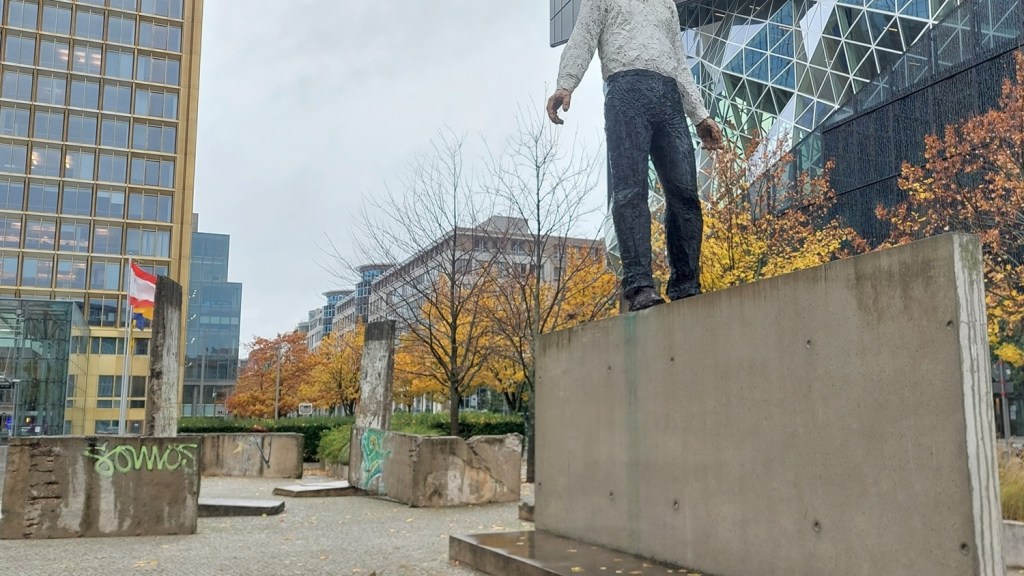
If you’re visiting Berlin, I highly recommend stopping by the Axel Springer SE building to see “Balancing Act” in person. It’s a powerful and thought-provoking piece that will leave you with a deeper understanding of the city’s history and the importance of freedom and unity.
 Frog on the border