
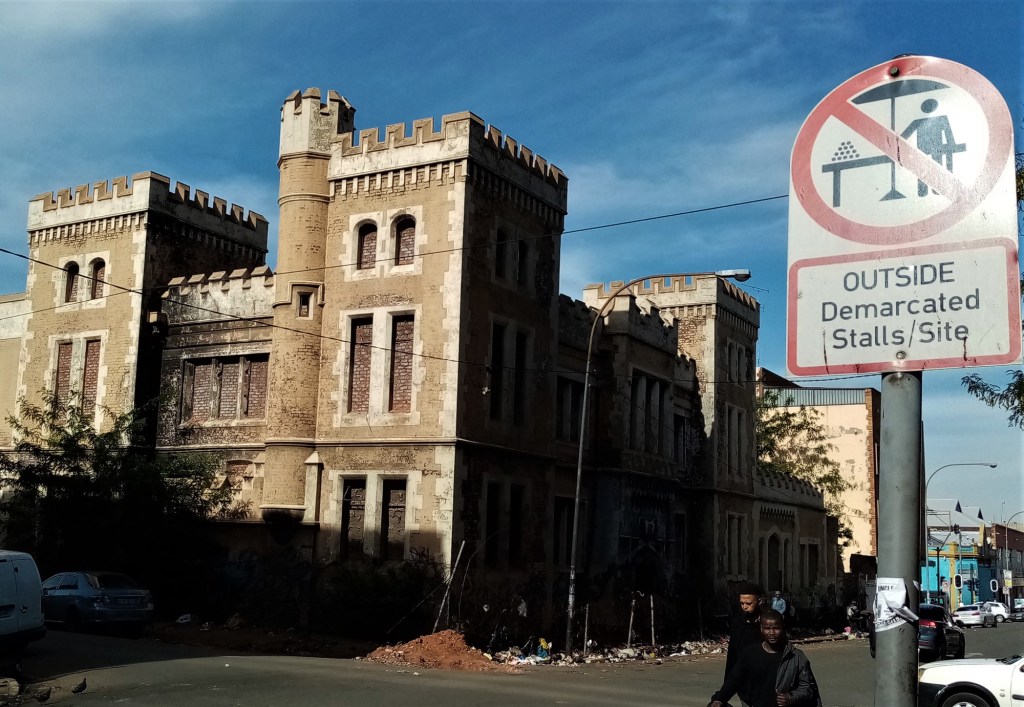
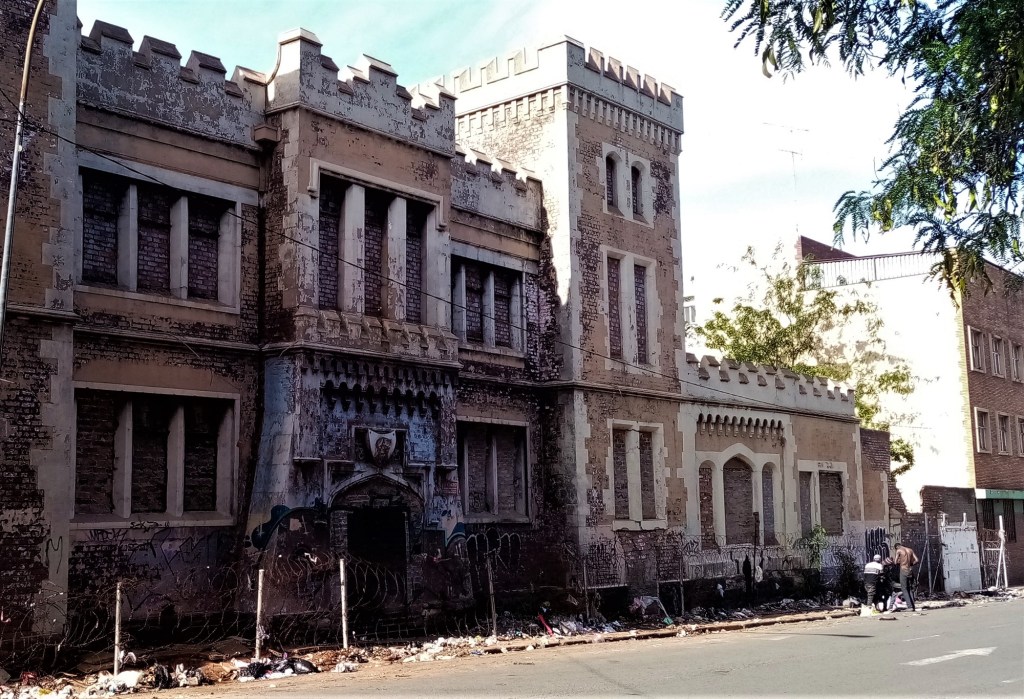
When you walk through the grit of downtown Johannesburg today, your eyes eventually hit a “glitch” in the skyline. Standing on Marshall Street is a red-brick fortress that looks like it was teleported from medieval Europe and dropped into the heart of the 19th-century gold rush. This is the Three Castles Building, and it is perhaps the most honest monument to the “boundaries” between the elite and the exploited.
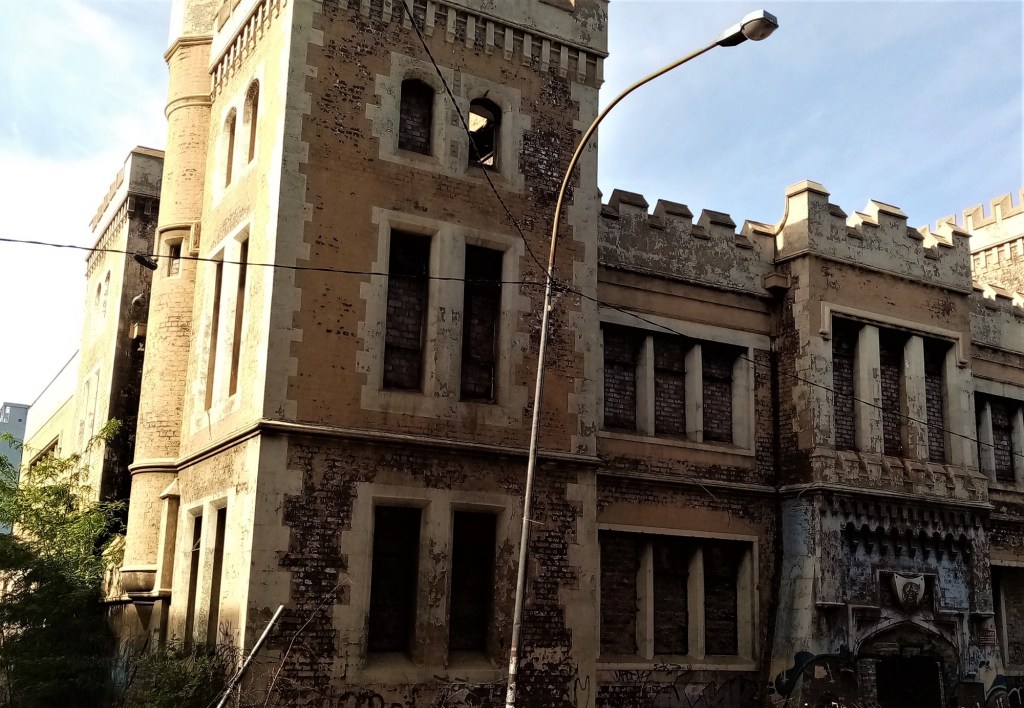
Built in 1894, this wasn’t a residence for royalty or a military outpost. It was a cigarette factory. At a time when Johannesburg was a chaotic, dusty mining camp, the “Three Castles” brand—named after the arms of Bristol—was marketed as the pinnacle of Victorian refinement.
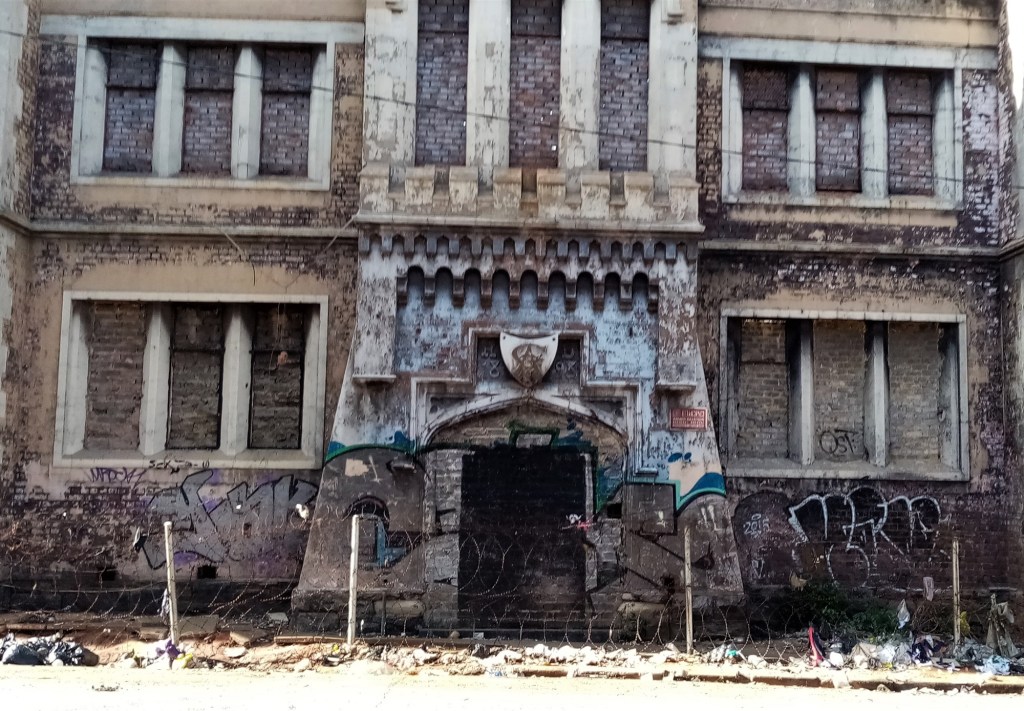
The building itself was a weapon of marketing. By wrapping a tobacco factory in the architectural language of a castle, the owners created a psychological boundary: they transformed a mass-produced vice into an aristocratic tradition. It was so successful that even President Paul Kruger, the stern, deeply religious leader of the Boer Republic, attended the opening ceremony. It is a supreme historical irony—the traditionalist Boer leader blessing the industrial machine of the very British “Uitlanders” he would soon go to war with.
In my blog, I often talk about the boundaries between the past and the future. Inside these walls, that boundary was crossed in the late 1890s.
Initially, the factory was powered by the hands of 100 female workers who rolled every cigarette with surgical precision. But as demand skyrocketed to over 300,000 cigarettes a day, the human hand became a “bottleneck.” Almost overnight, the women were replaced by steam-powered machines.
Standing in front of the facade in 2022, I couldn’t help but think of the “System Shock” those women felt. We talk about AI today as if technological displacement is a new fear, but the ghosts of the Three Castles prove that the “Border” between human labor and mechanical efficiency has been a site of conflict for centuries.
To the casual observer, the Three Castles is a relic of “British Imperialism.” But as a Pole, I look for the Anomalous Fact—the history that doesn’t fit the standard narrative.
While the British elite owned the “Castles,” the actual pulse of the South African tobacco industry was often sustained by Eastern European migrants. In the late 19th century, thousands of Jews and Slavs from the Russian Empire—Poles, Lithuanians, and Ukrainians—fled the partitions and pogroms of Europe. They arrived in Johannesburg with nothing, much like the Polish diaspora I tracked in Brazil.
Many of these “White” immigrants didn’t enter the country as conquerors; they entered as the “subaltern.” They worked the small shops and the factory floors, navigating a world where they were neither the British masters nor the local majority. When we look at this building, we shouldn’t see a “White Monolith.” We should see a complex hierarchy of class where a poor Polish or Lithuanian immigrant had more in common with the struggle of the local worker than with the British magnates who built these brick fortresses.
The Three Castles still stands, but its purpose has vanished. It remains a “Frog on the Border”—a building caught between its high-Victorian arrogance and the modern, vibrating reality of Johannesburg.
It reminds us that empires always try to build things that look permanent—castles, fortresses, monopolies—but the “Anomalous Fact” of history is that the machines always change, the borders always shift, and the people who actually build the world are rarely the ones whose names are on the front of the castle.
 Frog on the border