
If you follow my travels at Frog on the Border, you know I’m a sucker for a place with a story—especially one that’s a little bit “dark academic.” On a recent stroll through The Hague, I found myself at the Algemene Begraafplaats Kerkhoflaan, and let me tell you, this isn’t just a cemetery; it’s a silent chronicle of Dutch history.
The Most Peculiar Waiting Room
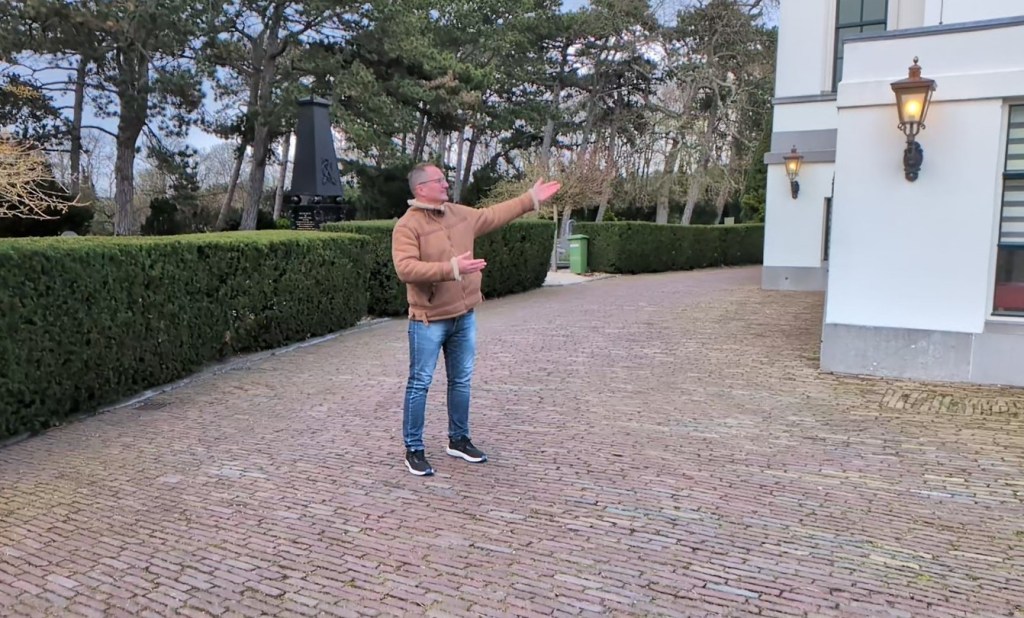
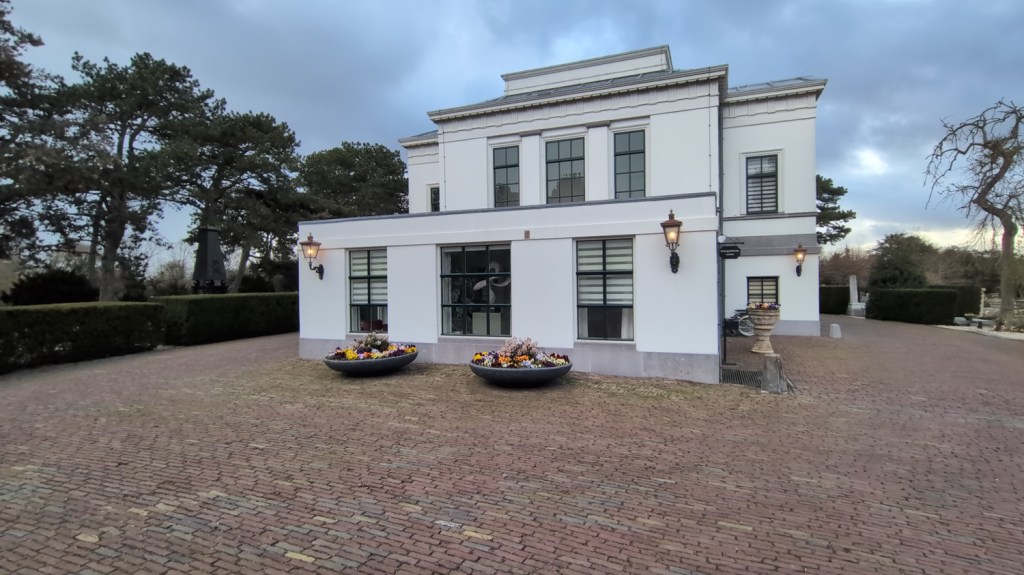
The centerpiece of the grounds is a stunning, white neoclassical building that looks more like a luxury villa than a morgue. But this house holds a spine-tingling secret.
In the 1800s, medical certainty wasn’t quite what it is today. People were gripped by the fear of being buried alive (apparent death). To ease the public’s mind, they built what was known as a Schijndodenhuis. Bodies were kept here for a “waiting period” to ensure they were truly gone before being laid to rest. Some of these houses even used bells attached to the fingers of the deceased—if you moved, you rang!
Standing in front of its crisp white walls today, it’s hard to imagine the eerie silence that must have filled those rooms two centuries ago.
Art, War, and Obelisks
Beyond the mystery of the “waiting house,” the cemetery is a masterclass in 19th-century design:
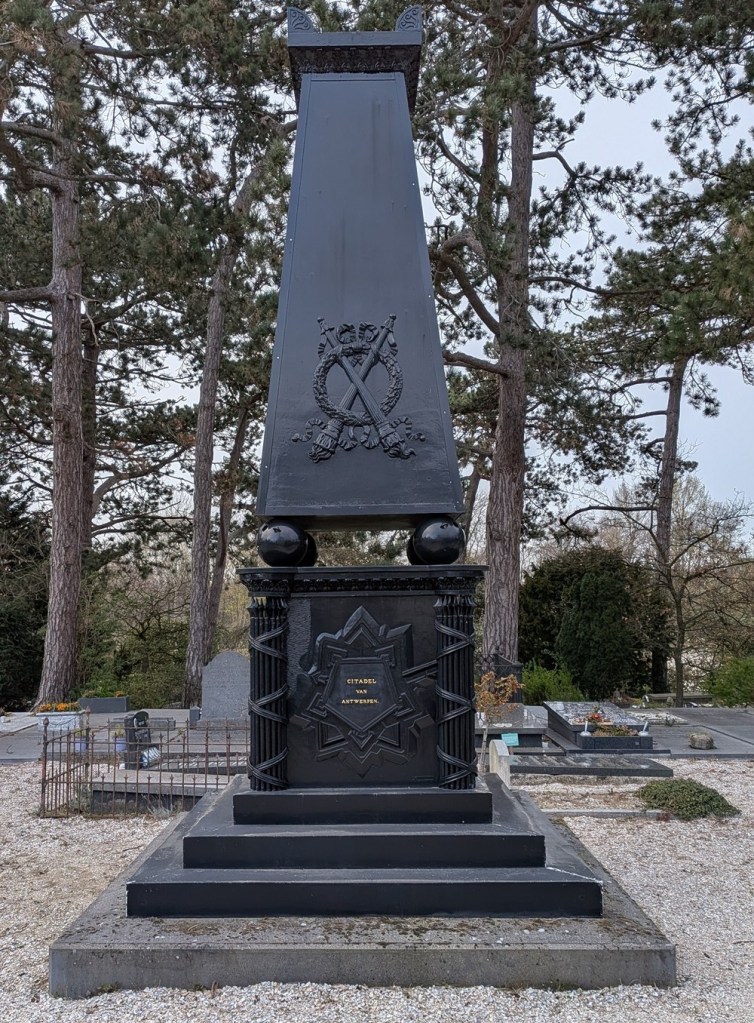
- The Citadel Monument: You can’t miss the massive black obelisk. It’s a somber tribute to the soldiers who defended the Citadel of Antwerp in 1832. The detail of the fortress map embossed on the base is incredible.
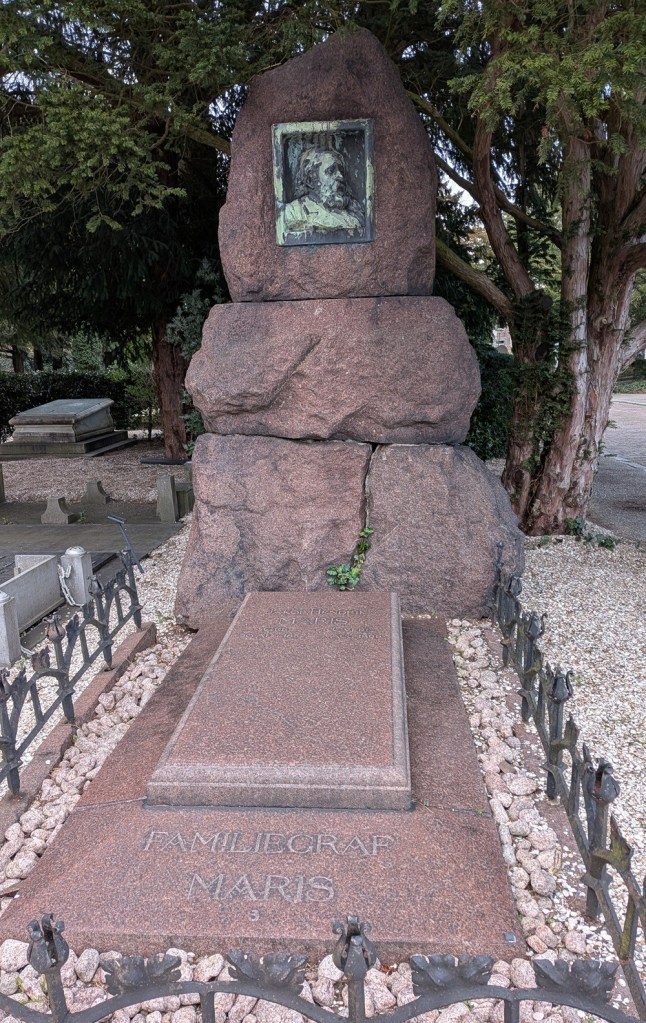
- The Maris Family Grave: As a fan of the Hague School of painters, seeing Jacob Maris’s final resting place was a highlight. His grave is marked by massive, rugged stones and a bronze relief of the artist himself, looking appropriately moody under the Dutch sky.
Why You Should Visit
Whether you’re a history buff, a fan of neoclassical architecture, or just looking for a peaceful escape from the city center, Kerkhoflaan is a must-see. It’s a place where the line between life and death was once a little bit “blurry,” and the architecture remains to tell the tale.
 Frog on the border