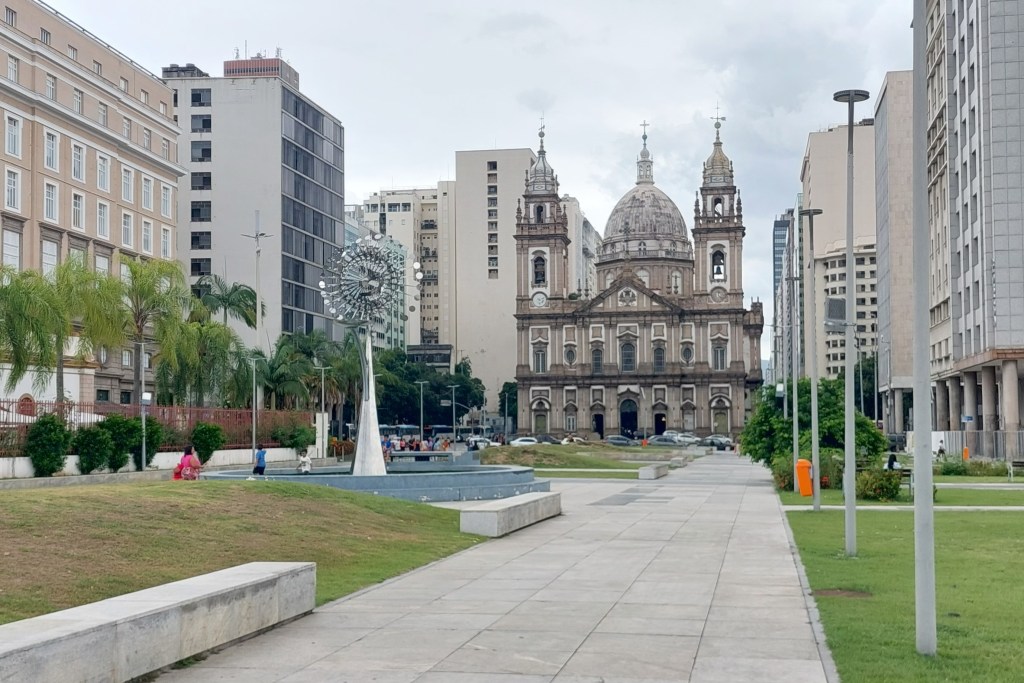
Rio de Janeiro is a city of impossible contrasts, where the “Marvelous City” glamour often sits shoulder-to-shoulder with a complex, sometimes heavy history. Nowhere is this more palpable than at the Igreja da Candelária. To the casual observer, it is an architectural triumph. To the local, it is a site of profound remembrance.
A Masterpiece in Stone
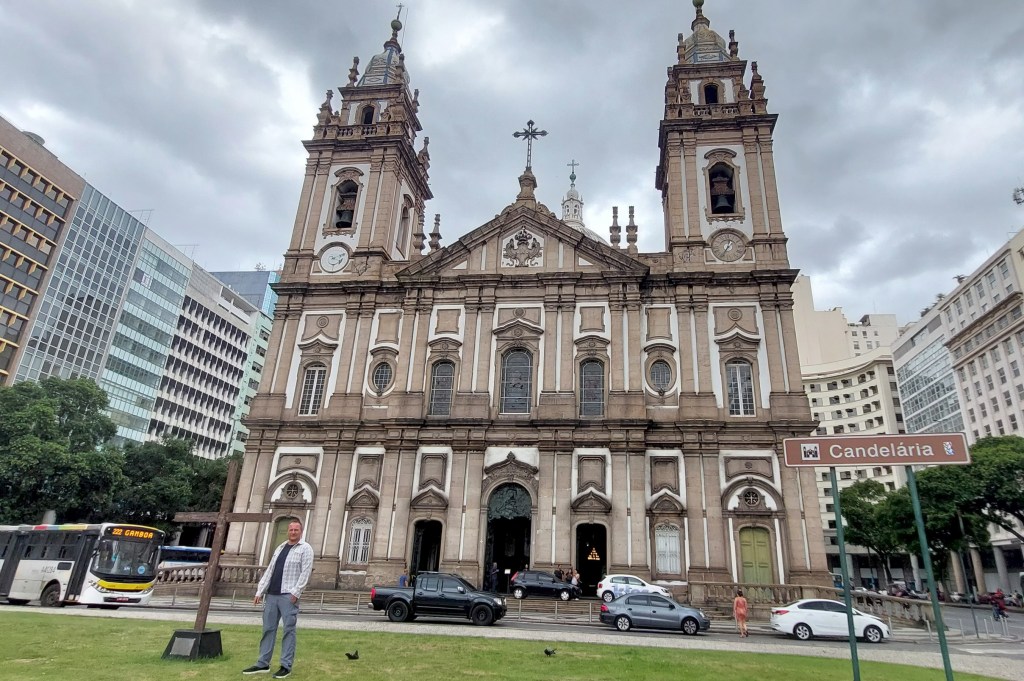
Rising from the heart of Rio’s financial district, the Candelária Church is a breathtaking fusion of Baroque and Neoclassical styles. Construction began in the late 18th century, and the result is a massive, soaring structure that feels like a piece of old-world Europe anchored in the Brazilian sun.
As you walk the Portuguese pavement—the iconic black-and-white stone mosaics seen and you are surrounded by the rhythmic pulse of modern Rio. But as you approach the steps, the energy changes.
To truly understand the weight of the memorial in, one must look past the immediate tragedy to the political and social currents that fuelled it. The Candelária massacre was not an isolated act of random violence; it was a symptom of a systemic phenomenon known as “social cleansing.”
1. “Social Cleansing”
During the early 1990s, Brazil faced a severe crisis with millions of “street children”—minors who were abandoned, orphaned, or had run away from home. In Rio alone, hundreds of children were murdered annually during this period.
Death Squads: Many of these killings were carried out by “death squads”—vigilante groups often composed of off-duty military and civil police officers.
The Business of “Cleaning”: Local merchants and business owners, who viewed the children as a “public nuisance” and a threat to tourism and commerce, sometimes hired these off-duty officers to “clean up” the streets through intimidation or murder.
Impunity: These squads operated with significant impunity, sometimes receiving quiet support from a public that was terrified of street crime and felt the formal justice system had failed.
2. The Trigger at Candelária
The events of July 23, 1993, were reportedly sparked by a minor confrontation the previous day.
The Incident: Children staying near the church allegedly threw stones at a police car.
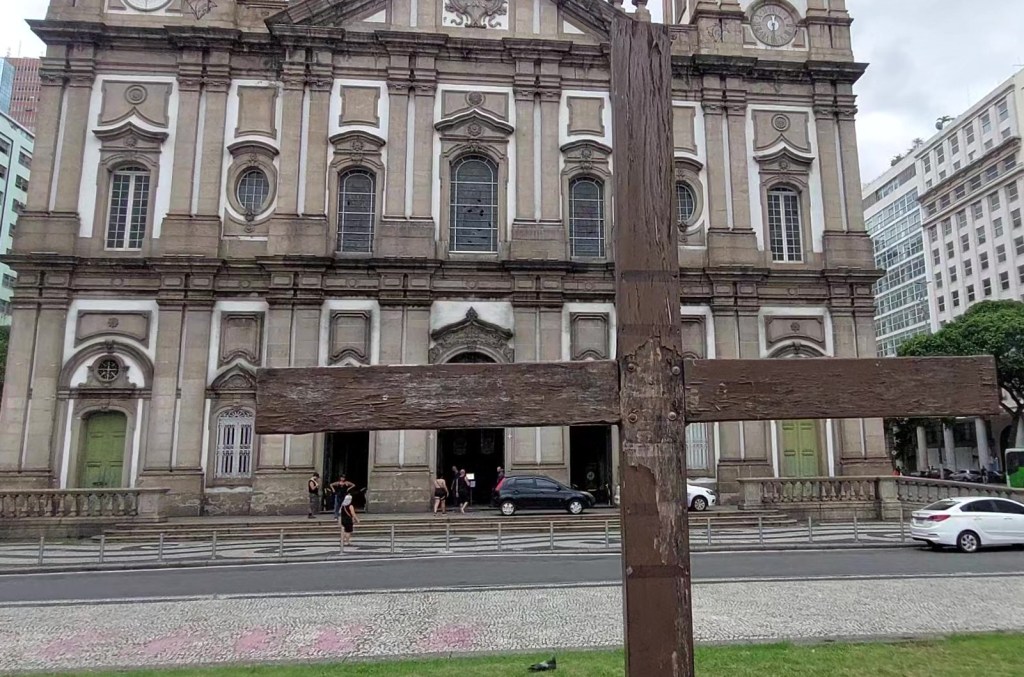
The “Lesson”: Instead of a formal arrest, members of the Ninth Battalion of the military police decided to “teach them a lesson”. At midnight, gunmen in cars with covered license plates opened fire on approximately 70 sleeping children.
The Victims: Eight people died—six of whom were minors. Some were shot where they slept; others were abducted and executed elsewhere.
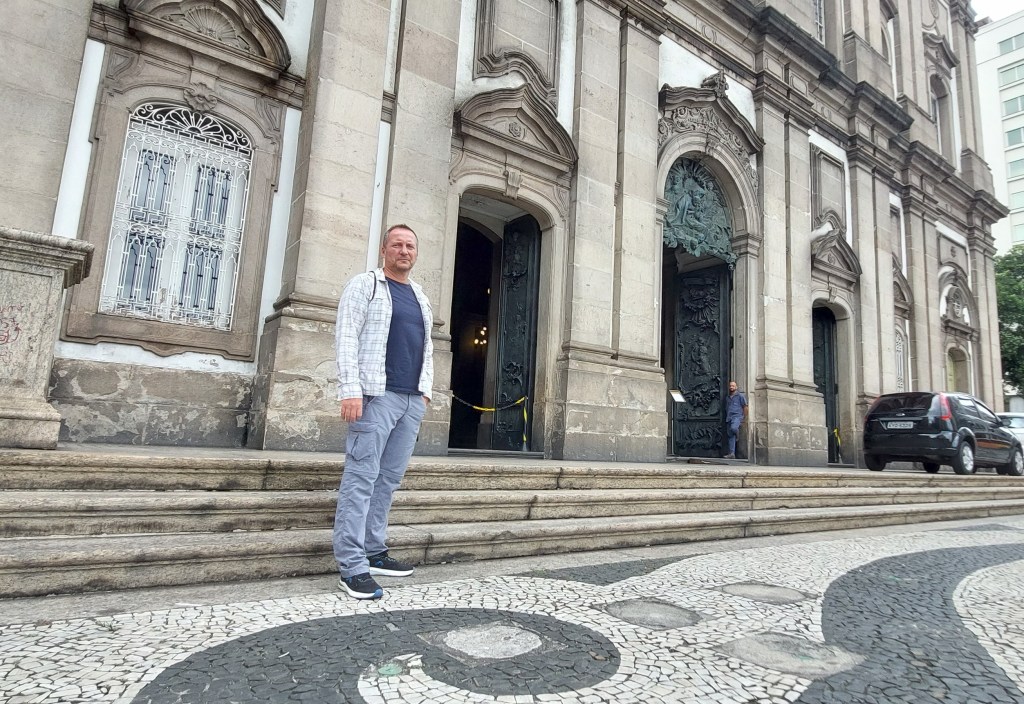
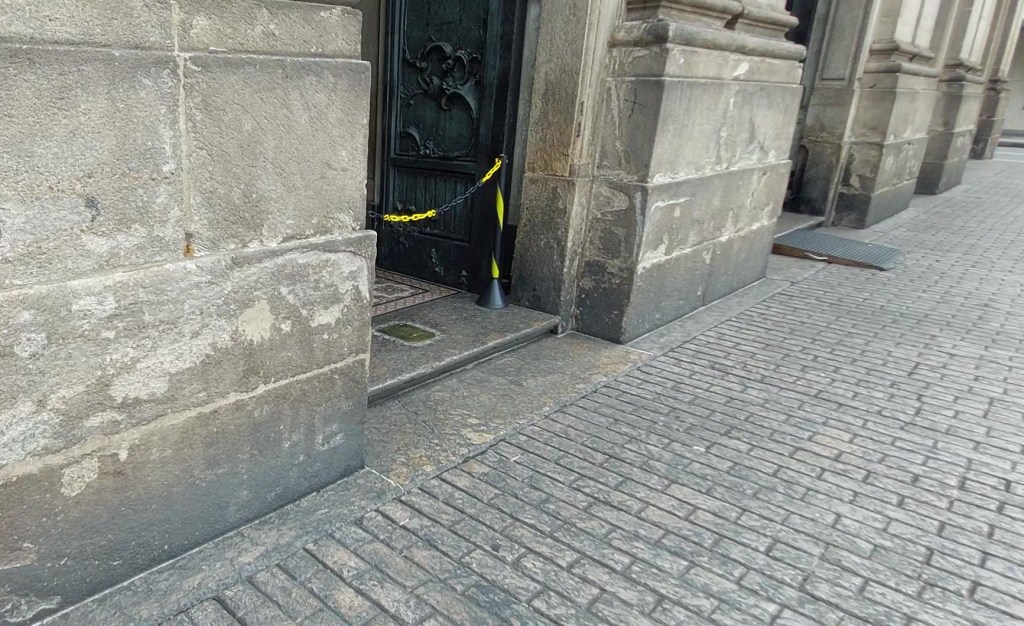
Below is the exact stone threshold where the sanctuary of the church met the cold reality of the streets. On that night in July 1993, this pavement was covered with roughly 70 children and young adults who had curled up against the heavy bronze doors, seeking safety in numbers. As they slept, a group of gunmen—later revealed to be off-duty military police—pulled up in unmarked cars and opened fire directly into the huddle of sleeping bodies. The quiet of the night was shattered by the echoes of gunfire against these very stone walls as the children scrambled to flee, leaving the steps stained with the blood of those who couldn’t escape the “social cleansing” meant to erase them. Today, the stillness of the entrance stands as a haunting, silent witness to the moment this place of worship became a site of state-sponsored slaughter.
3. The “Fortress of Impunity”
The memorial is a rare victory for public memory, as the legal battle that followed was gruelling.
- Witness Peril: Most survivors were too terrified to testify. One key witness, Wagner dos Santos, survived two separate assassination attempts by police before fleeing to Europe under federal protection.
Sentencing: While several officers were eventually convicted, including one sentenced to over 300 years (later reduced), many higher-ups who likely sanctioned the violence were never prosecuted.
Standing in front of the church today, the “intriguing” beauty of the architecture clashes with this history. It forces a realization: the very institutions meant to protect the public—the police and the state—were the perpetrators of this “social cleansing.”
4. A Mirror of Violence
The Candelária Massacre wasn’t an isolated event; it was part of a systemic pattern. Just one month later, the Vigário Geral massacre occurred, where 21 residents of a favela were killed by a similar death squad in an act of revenge for the murder of police officers. These events together forced Brazil to confront the reality of “death squads” operating within its own security forces.
Why You Should Visit
Visiting Candelária is a lesson in the “full soul” of a city. You come for the beauty, but you stay for the story:
- The Architecture: The massive bronze doors and the interior dome are among the finest in South America.
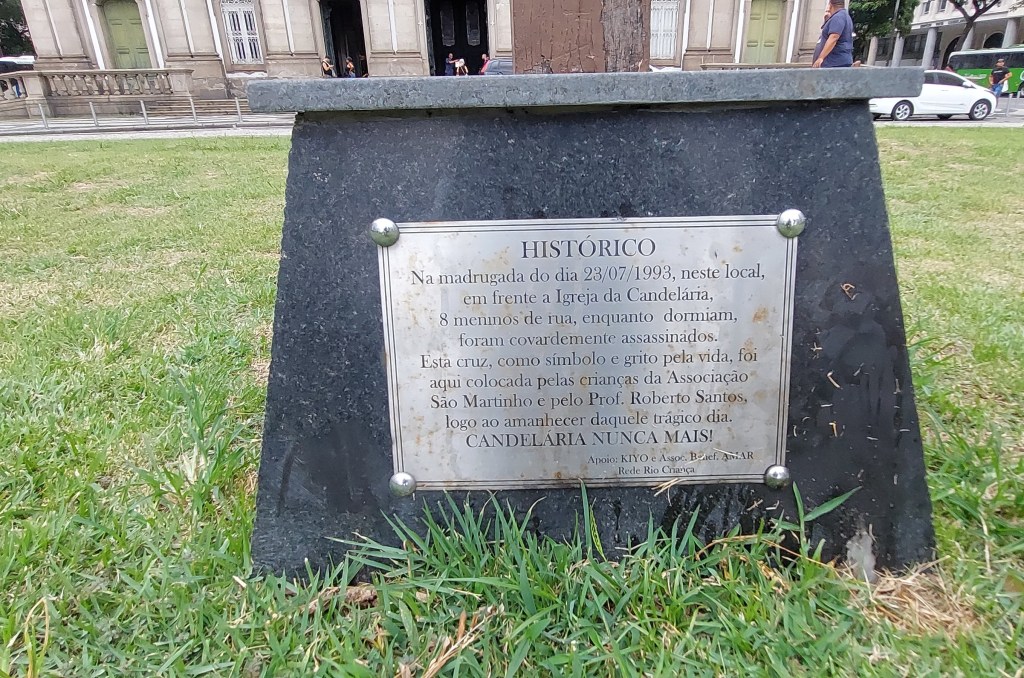
- The Memorial: The plaque at the base of the cross is a “shout for life,” reading Candelária Nunca Mais!—Candelária Never Again.
- The Reflection: Seeing a traveler stand before these towers reminds us that we are guests not just in a city’s space, but in its history.
If you visit, take a moment of silence at the memorial. It’s a powerful reminder that travel is as much about witnessing a culture’s scars as it is about admiring its monuments.

