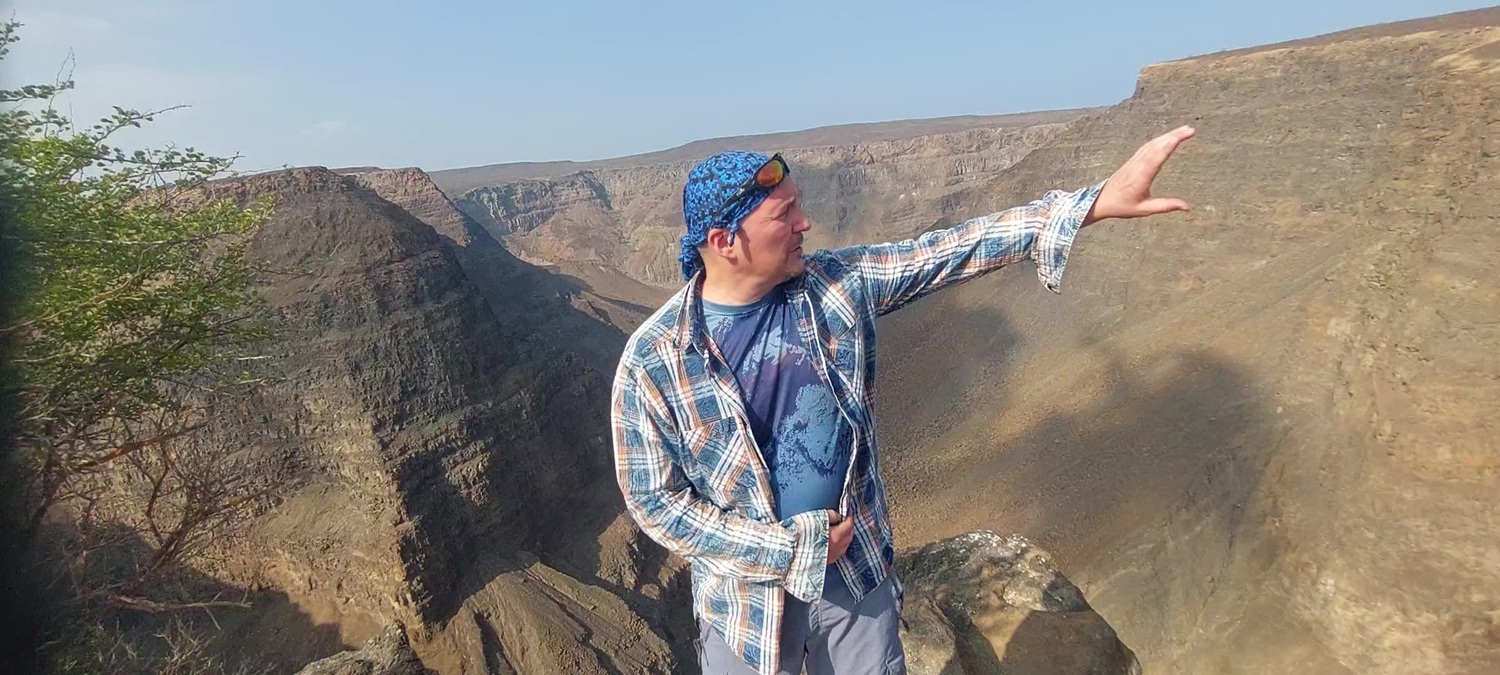
When you travel overland through the Horn of Africa, the most profound moments rarely happen where you planned them. They find you in the dust of a roadside pitstop, long after you’ve left the official itinerary behind.
On my journey through Somaliland for Frog on the Border, I had traveled by truck from Djibouti to Hargeisa, using the capital as a launching pad to explore the region’s intellectual and historical landscape. That path eventually led me west to the city of Borama to visit Amoud University—a proud symbol of the region’s post-war rebuilding and academic resilience. But it was on the return journey from Borama back to Hargeisa that the highway offered up a completely unexpected chapter.
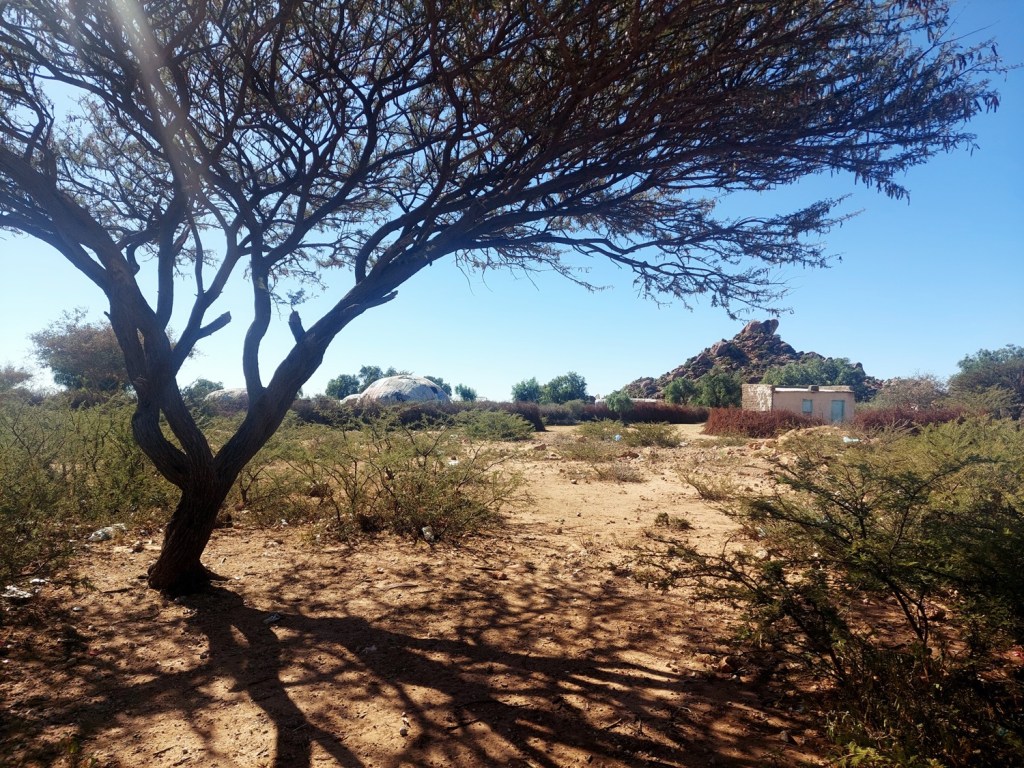
As our vehicle rolled down from the high plateaus, we pulled off the main asphalt artery and into the mountain pass town of Dilla.
The Oasis at the Crossroads & Maqamka Sh. Noor
Dilla isn’t just a place to stretch your legs; it is a critical geographic bottleneck where the paths of students, traders, and overland travelers naturally collide. Stepping out into the bright afternoon sun, the town square instantly reveals Dilla’s unique local character.
While much of the surrounding landscape is defined by vast, open plains, Dilla sits nestled in a relatively lush, green agricultural valley framed by an imposing backdrop of massive, weather-beaten granite hills and boulder formations. It’s a terrain that feels ancient and protective, a natural sanctuary carved out of the rugged earth.
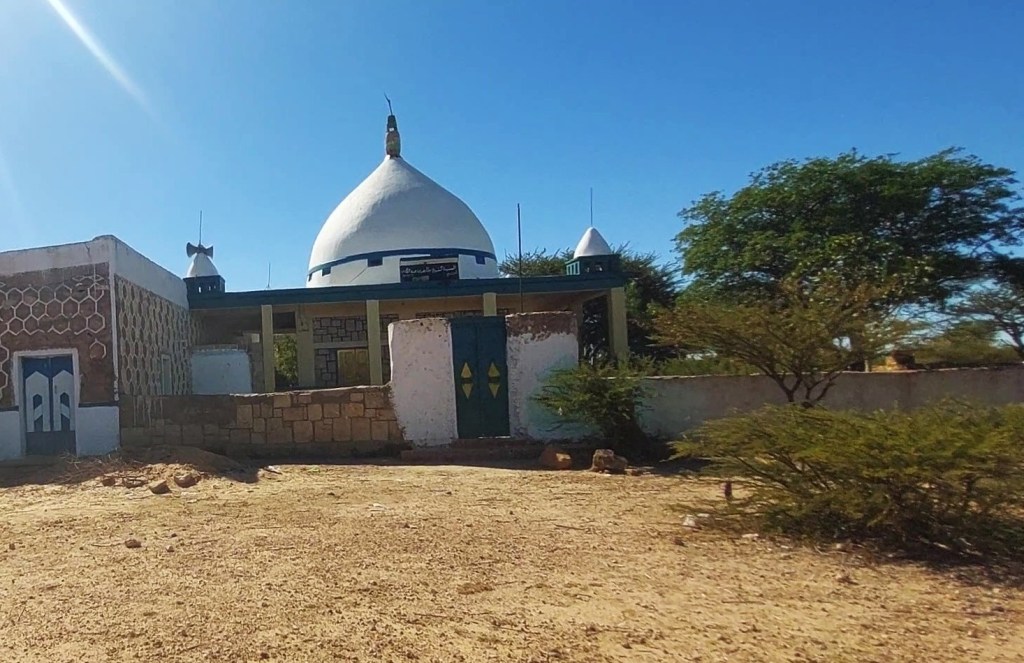
Right in the center of this bustling transit hub stands the town’s architectural, spiritual, and historical anchor: Maqamka Sh. Noor (The Shrine of Sheikh Nur).
To a passing outsider, the pristine white dome and the adjacent building with its intricate, stone-mosaic walls look like a beautiful, unique roadside mosque. But for the community under the Dilla Local Administration, this site holds profound historical significance.
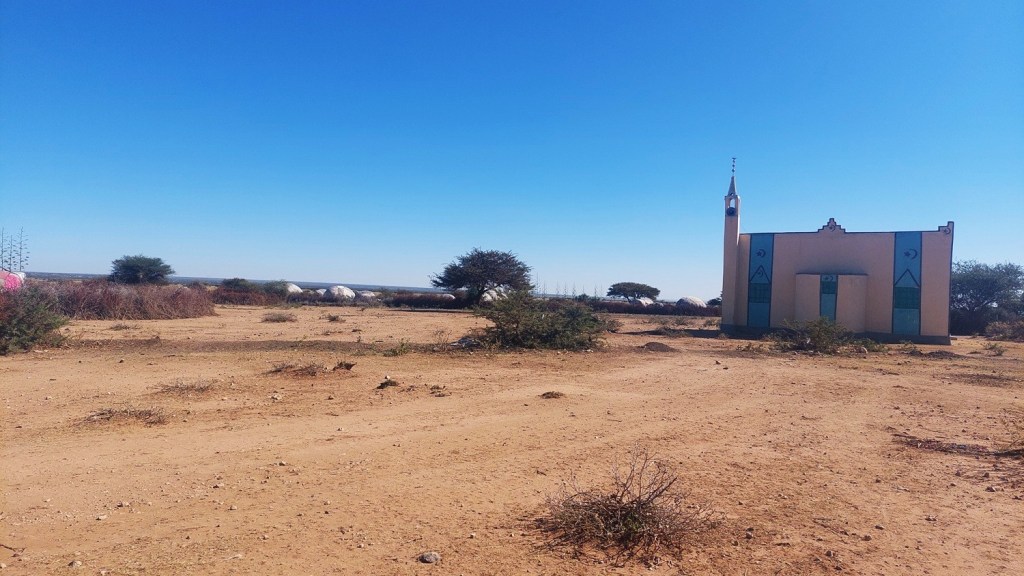
In this regional tradition, a Maqam marks the station, sanctuary, or tomb of a highly revered historical figure. Sheikh Nur was a foundational pillar of the community’s heritage. Shrines like this played a monumental role in the region’s history, acting as designated zones of peace and reconciliation. Historically, even during times of intense inter-tribal conflict or territorial disputes, the ground surrounding a Maqam was treated as sacred, neutral territory. Travelers, merchants, and nomadic herders knew they could find absolute safety, water, and sanctuary beneath the shadow of that dome. Today, it remains a quiet center of gravity for a town that otherwise watches the fast-paced modern world drive past its doorstep every single day.
Ingenious Architecture of the Plains
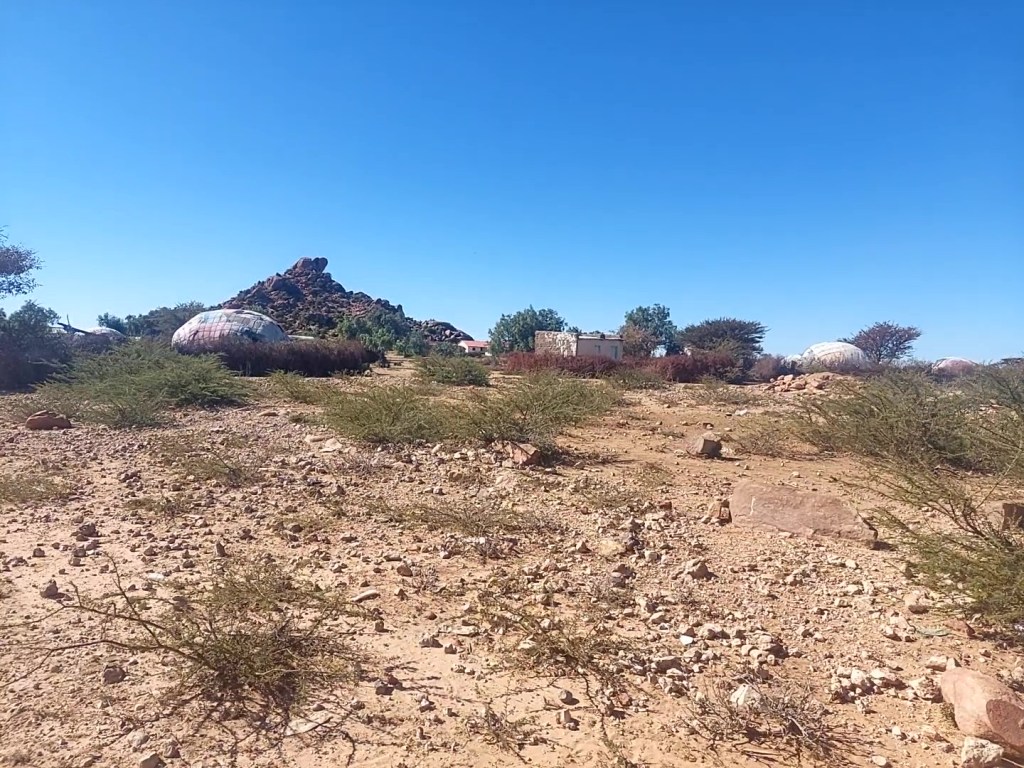
As we walked the outskirts of the town, the view opened up across the valley floor, revealing a scattering of distinct, igloo-shaped structures dotting the distant horizon. These are traditional nomadic dwellings, known locally as the Aqal.
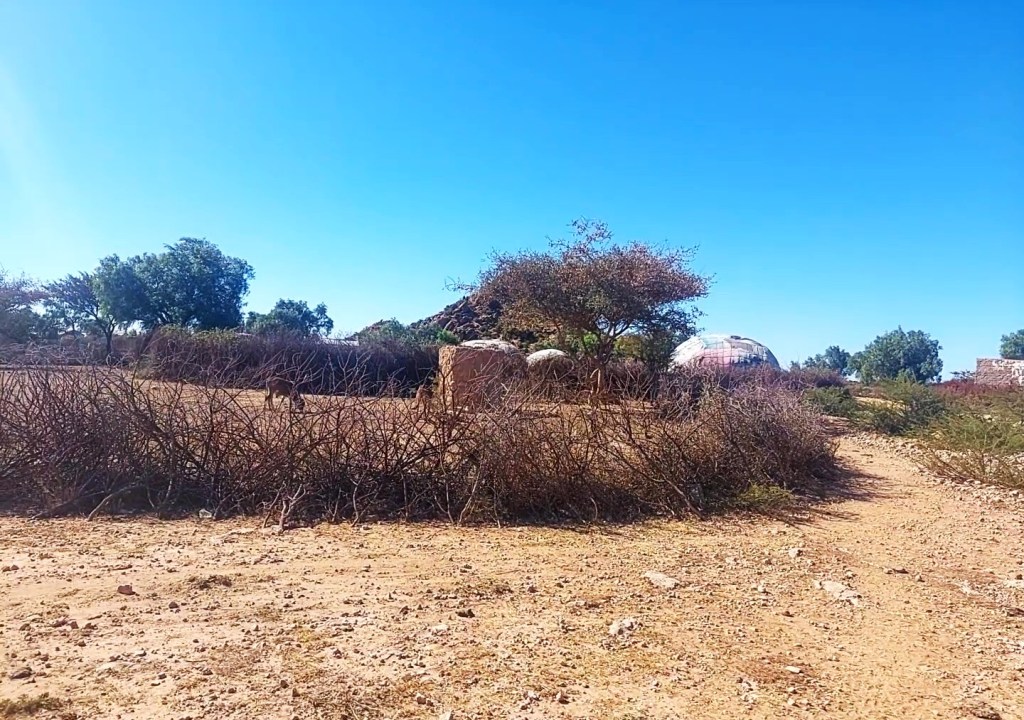
Seeing them framed by the dry earth gives you an immediate appreciation for indigenous design. The Aqal is a masterpiece of nomadic engineering, honed over thousands of years to conquer one of the harshest environments on earth:
- The Framework: It is constructed using a flexible, dome-shaped skeleton of woven tree branches, meticulously bent and tied together to form a highly aerodynamic, igloo-like profile. This shape allows the fierce, dust-laden desert winds to slide effortlessly over the structure rather than tearing it down.
- The Covering: The dome is heavily insulated with layers of hand-woven mats made from desert grass, palm fronds, and sometimes textiles or animal skins.
- The Climate Control: This clever layering creates a highly effective thermal barrier. During the blistering midday heat, the thick mats block out the sun and keep the interior remarkably cool; at night, when the desert temperature plummets, the structure traps the ambient warmth inside.
- Ultimate Mobility: Because it is designed for a pastoralist lifestyle, the entire “igloo” can be disassembled in a matter of hours, packed systematically onto the backs of camels, and transported across miles of wilderness to the next seasonal grazing ground.
A Walk in Deep Time with a Wise Man
The true magic of the stop materialized when my hosts introduced me to a local elder—a prominent, deeply respected wise man who personified the living history of the Dilla valley. Lean, carrying a weathered wooden walking stick, and radiating an aura of calm authority, he welcomed me not just as a passing tourist, but as a guest to his homeland.
Leaving the noise of the highway and the market stalls behind, he led me down on foot into the dry, sandy riverbed (tog) that cuts directly through Dilla’s basin.
Walking between the massive, sun-warmed granite boulders and under the sparse shade of ancient acacia trees, the frantic pace of overland travel completely evaporated. Communicating through my hosts, our interaction quickly bypassed standard small talk. He spoke of the riverbed not as a barren, dry trench, but as a lifeline—explaining how the seasonal torrents of water rush down from the mountains, and how the community reads the micro-signals of the weather, the trees, and the sand to predict the coming rains.
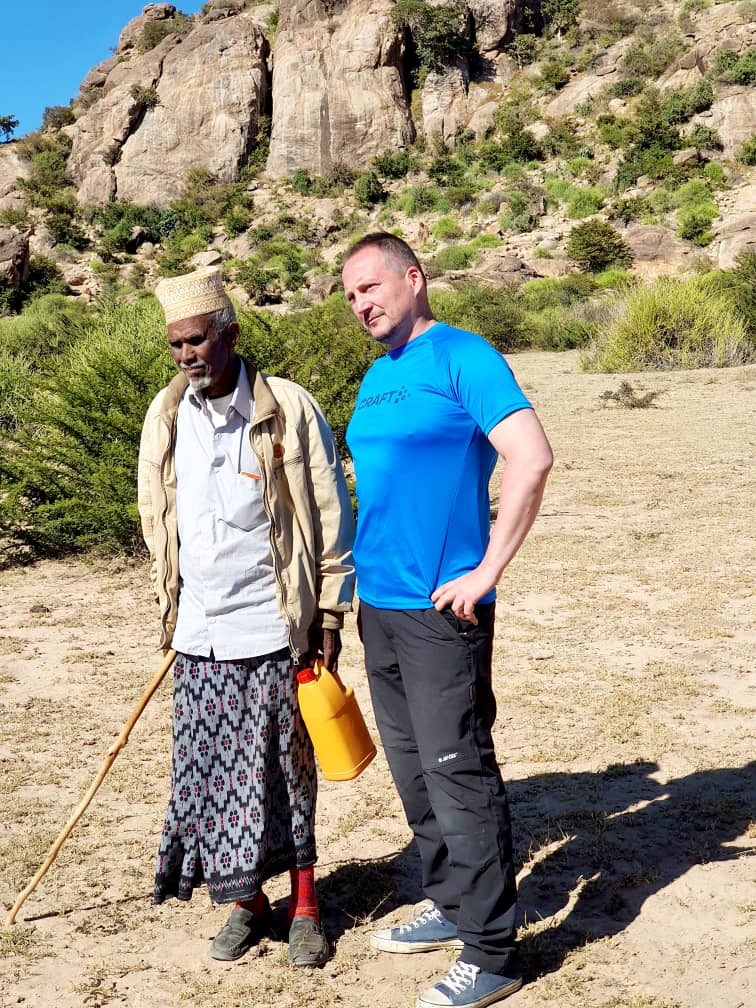
To walk through a landscape like this with a prominent local elder is an exceptional opportunity for any traveler. He didn’t just point out the geography; he shared the quiet rhythm of a place that has sustained life for generations. There was a profound wisdom in his perspective: to him, wealth wasn’t measured by modern infrastructure, but by the resilience of the community, the health of the livestock, and the preservation of peace under the guidance of historical sanctuaries like the Maqam. Standing in that dry riverbed, looking up at the hills that have stood watch over centuries of trade, you realize that the real heartbeat of Somaliland isn’t found in its major cities, but in the memory and grace of the elders who steward these valleys.
Heading Back to the Plateau
Our time in the valley was brief but indelible. After sharing a moment of mutual respect and bidding farewell to the wise man, we climbed back into our vehicle and pushed east. The rocky hills of Dilla slowly began to flatten out into the open, semi-arid plateau. Passing more rural settlements where the white domes of the aqal dotted the landscape, the terrain returned to its vast, sun-baked scale.
Before long, we hit the famous Kalabaydh Junction. The massive green highway sign loomed overhead, pointing cars and heavy freight trucks toward Tog-Wajaale on the Ethiopian border, or back east toward Hargeisa.
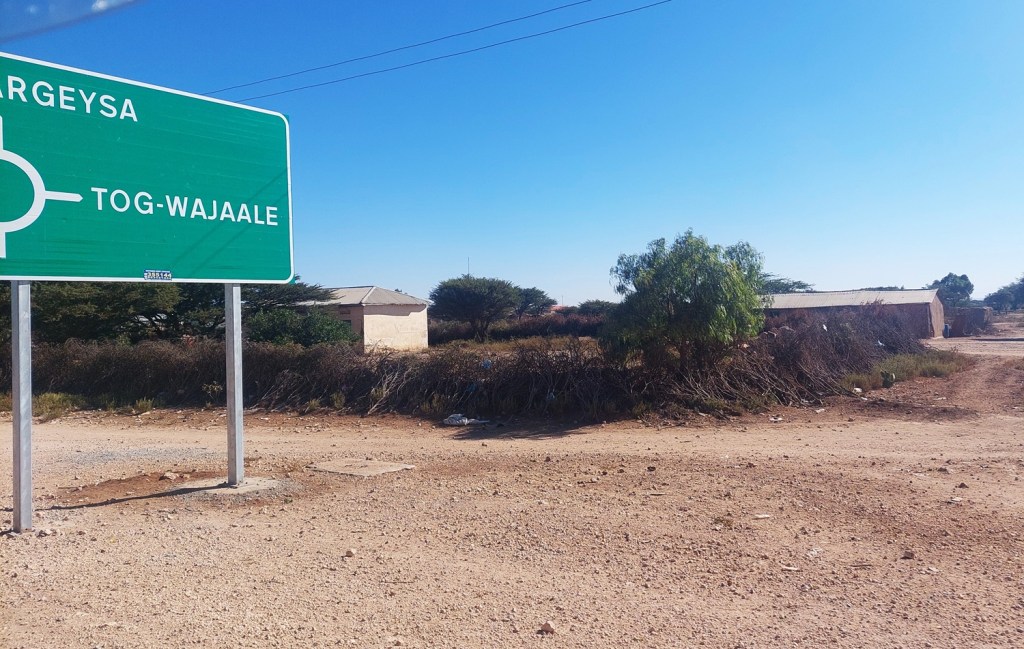
Modern transportation can bridge vast distances in hours, and borders map out where one country ends and another begins. But it’s these spontaneous dirt-road detours—where you find sanctuary at a centuries-old shrine, marvel at the ancient geometry of a nomadic home, and walk a dry riverbed with a local wise man—that ultimately give a journey its soul.
 Frog on the border