There is a line on a map, and then there is a border you feel. It’s the half-second where a wild animal decides you are not a threat, or that you are lunch, or that you have cookies.
On this loop through the South Pacific, I crossed that border three times.
1. FIJI: The Moment The Reef Stops Being Pretty
Mamanuca Islands, Fiji – 26°C water, 20m visibility
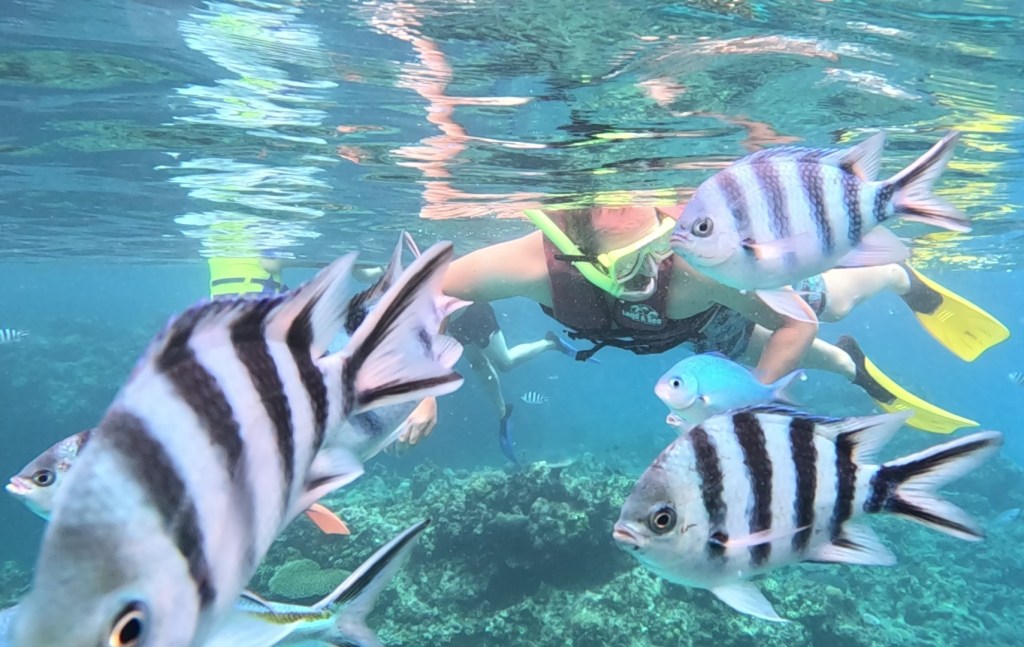
I thought I knew what I was doing. Mask on, yellow fins on, that bright green snorkel that makes you look like a lost Teletubby. The water was absurdly clear. Schools of black-and-white striped sergeant majors came so close they blurred my lens – you can see them in the photo above, inches from my face.
It’s easy to forget you’re a guest out there. The reef is a city – blue damselfish, fusiliers with yellow racing stripes, coral gardens that look like lungs. And then the city goes quiet.
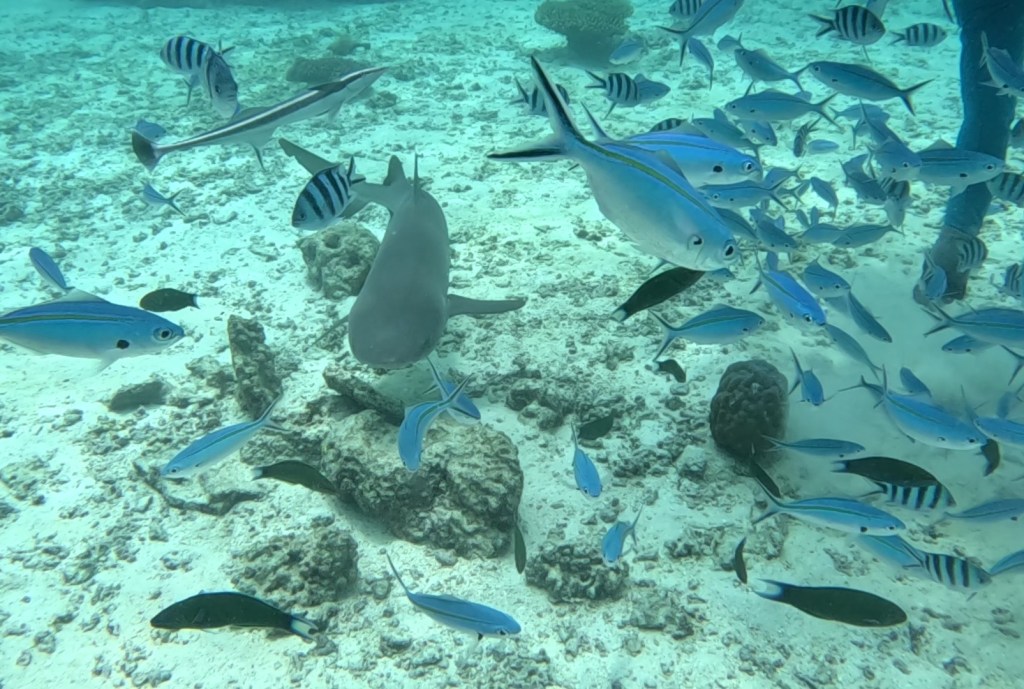
That is a blacktip reef shark. Maybe 1.4 meters. Not big by shark standards, huge when it swims straight at your camera over white sand, as it did here. You can see my dive guide’s leg on the right – we were in less than 3 meters of water.
No one had to say “shark.” Everyone just stopped kicking.
What I felt: My breath got loud inside the snorkel. Not panic, exactly – more like primitive respect. Your brain finally understands that you are not at the top of anything out here. The shark circled once, completely uninterested in us, and melted back into the blue. The small fish exploded back around it like nothing had happened.
The data you need: Fiji has over 75% of the world’s reef shark species. The blacktips you snorkel with in the Mamanucas are shy, mostly juvenile, and hunt the small silver fish you see in this photo. They are not baited here – this is a natural cleaning station on the sand. Go in the morning, before 11am, when the water is calmest. Operator on my vest: Lagoon & Sea – they respect the 2-meter distance.
2. TASMANIA: The Great Cookie Heist
City Park / Garden Park, Launceston, Tasmania
From apex predator to… this lot.
After Fiji, I wanted to sit still. Launceston’s City Park – the locals just call it the Garden Park – is perfect for that. 1820s park, big elms, a duck pond that has been there for generations.
I sat down with a pack of cookies. That was my first mistake.
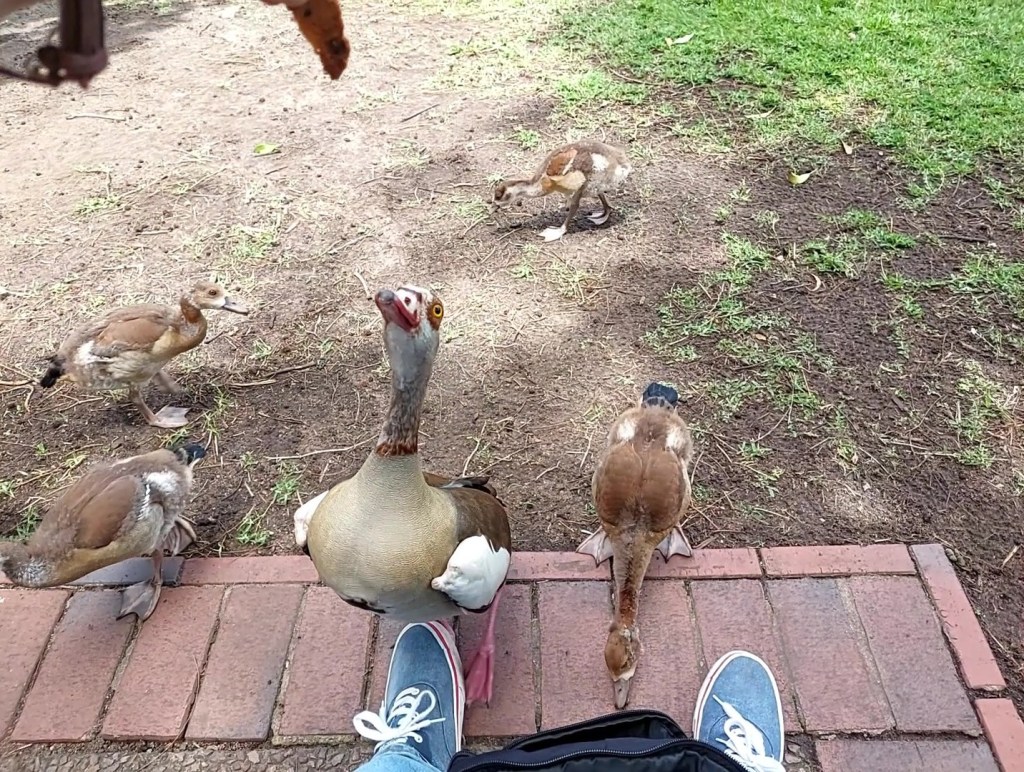
What you see here are not ducks, but Egyptian Geese with chicks. And they run this park like a mafia. Look at the one on the left – beak open, already negotiating. Within 60 seconds I had seven of them at my blue sneakers, staring up at the bench. No fear. No quacking. Just pure, focused entitlement.
One of the goslings is hiding behind mum on the right. The adults will walk right onto the bench with you.
What I felt: I laughed until my stomach hurt. After the silent tension of the shark, this was pure slapstick. You can’t be an intrepid travel blogger when a goose is trying to pickpocket your cookies. The border disappeared again, but this time because they decided my bench was theirs.
The data you need: City Park is Launceston’s oldest park. The Egyptian Geese are introduced, but now very much at home. Please don’t feed them bread or cookies (I learned after this shot) – it causes angel wing in chicks. The park has a small kiosk that sells proper seed if you want to be invited to the heist.
3. UNZOO: When You Are Chosen
Tasmanian UnZoo, Taranna, Tasman Peninsula
The UnZoo is not a typo. It’s Australia’s first “un-zoo” – the idea is that you are the one being observed. No cages. You walk through native bush, and the animals choose if they want to meet you.
It had been a drizzly Tassie day, the kind where the eucalyptus smells strong and the path is all wet leaves. I had a small handful of seed in my palm and zero expectations.
Then he came.
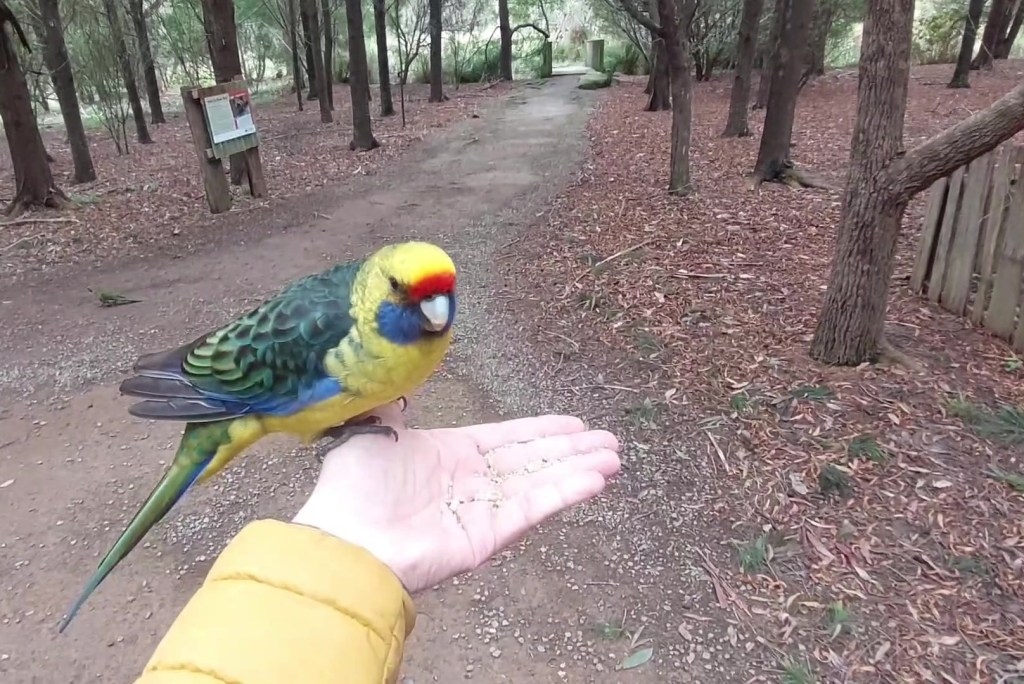
This is a Green Rosella. Platycercus caledonicus. Endemic to Tasmania only – you will not see this bird anywhere else on Earth. Yellow head, red forehead band, that impossible blue cheek, green scalloped wings.
He landed so lightly I almost didn’t feel the claws. He looked at me, looked at the seed, and decided to stay.
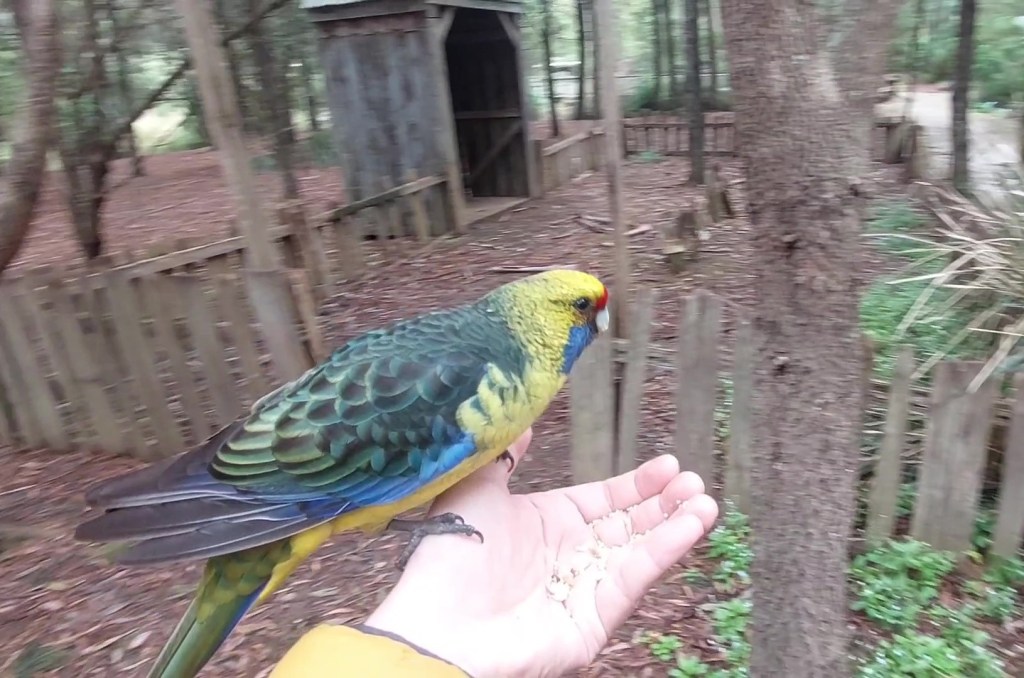
In the second shot you can really see his eye – he is calm. Not a trained parrot doing a trick. A wild-ish bird in a sanctuary that has learned that humans can be safe.
What I felt: After being hunted and then robbed, to be trusted. That was the strongest feeling. The tiny weight on my hand, the little pricks of his feet, the way he took one seed at a time so gently. For three minutes, there was no border at all.
The data you need: Green Rosellas live 15-20 years, mate for life, and are tetrachromatic – they see UV colors we can’t. The Tasmanian UnZoo at Taranna (near Port Arthur) is 35 minutes from Hobart. Your ticket goes directly into Tasmanian Devil conservation. The bird feeding walk is at 11am and 2pm – that’s when this happens.
Why These Three Together?
On paper, Fiji and Tasmania have nothing in common. One is tropical, one is temperate. One wants to test you, one wants to steal your lunch.
But each time, the story was the same: I showed up with a plan – “I will snorkel,” “I will eat cookies,” “I will see birds.” And each time, the animal rewrote the plan.
That’s why I keep calling this blog Frog on the Border. The best moments aren’t when you cross a country. They’re when something crosses over to you.

