I went to Liberdade expecting an Asian escape in the middle of South America.
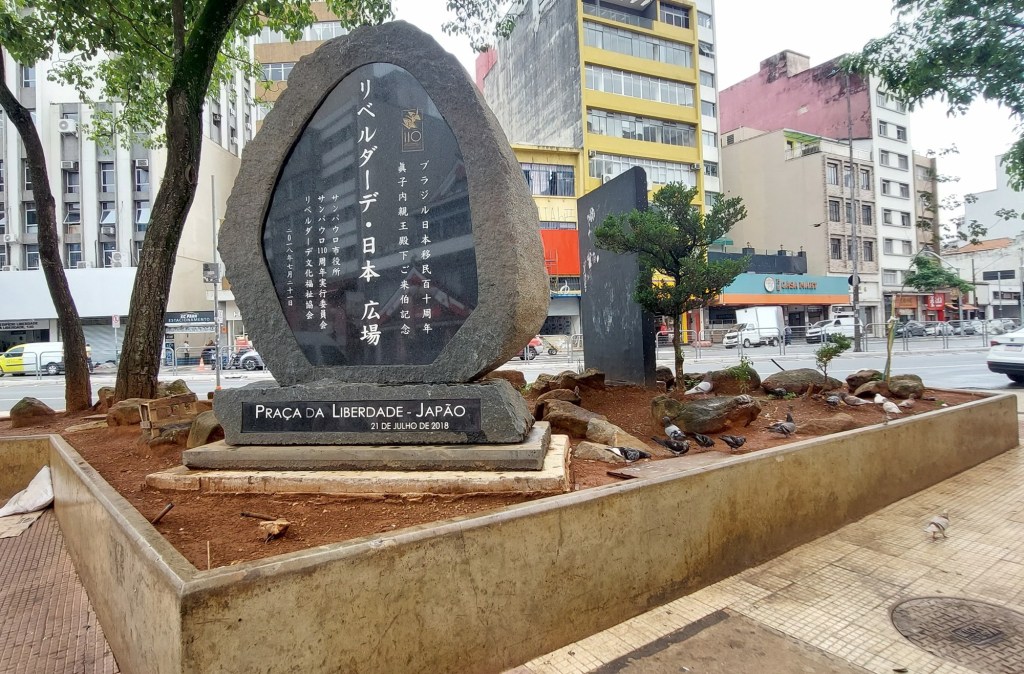
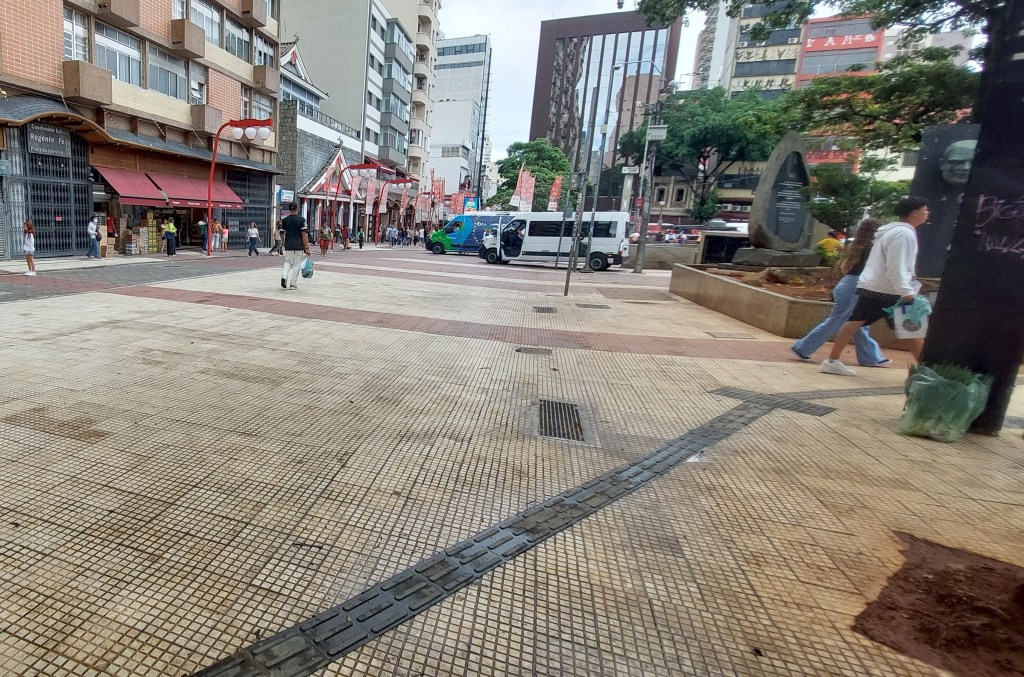
You step out of the metro station directly into a sensory rush that tricks your brain into believing you’ve teleported thousands of miles across the Pacific Ocean. Bright red torii-style street lamps frame the concrete avenues, the air thickens with the scent of sizzling pastéis and street food, and weekend crowds drift past storefronts stacked with Japanese skin care, anime merchandise, and tea shops. At the heart of the square sits a massive granite monument dedicated to the 110th anniversary of Japanese immigration to Brazil.
It feels vibrant, bustling, and straightforward. But travel always has a way of pulling back carpets you didn’t know were laid down.
When you look down at the pavement beneath your trainers, the mood shifts entirely. You realize you aren’t just walking through a global cultural enclave; you’re standing on top of a ghost story.
1. The Shallows of History: The Execution Ground of Largo da Forca
Long before the iconic red lamps were installed in the 1970s, and decades before the vessel Kasato Maru brought the first wave of Japanese contract laborers to Brazilian coffee plantations in 1908, this square was known by a far darker name: Largo da Forca—Gallows Square.
During the 18th and 19th centuries, São Paulo was still a expanding colonial outpost, and this patch of earth sat right on the southern periphery of the urban core. Because it sat outside the central commercial zone, colonial Portuguese authorities selected it as the city’s official public execution ground. It was designed specifically for theater: a public venue to hang enslaved individuals, Indigenous insurgents, and rebellious soldiers to terrorize the local population into submission.
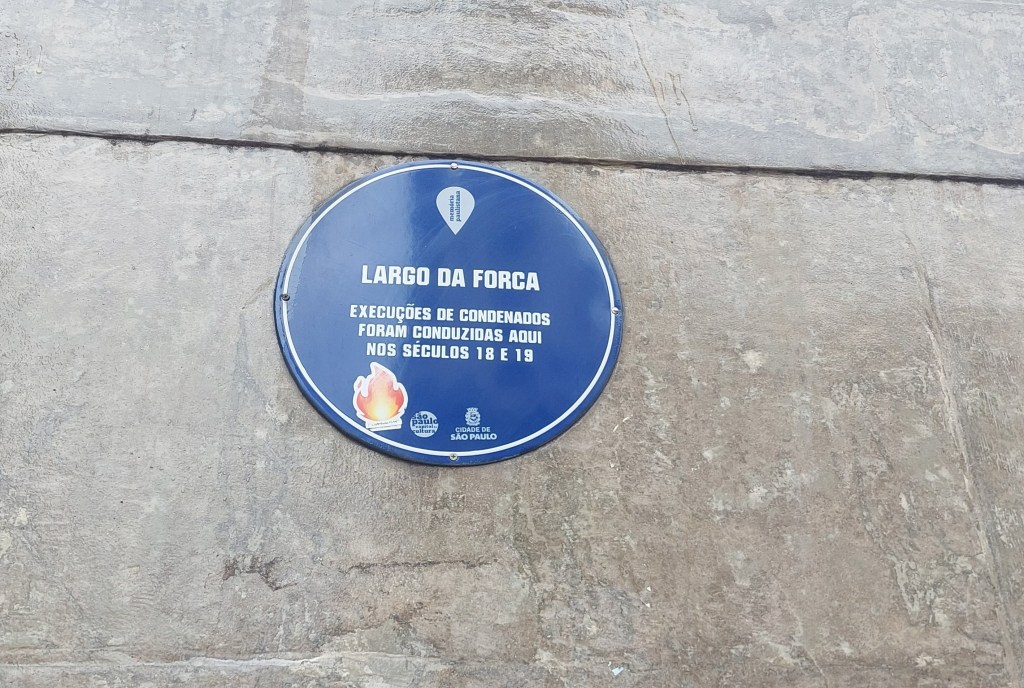
Standing on the tile paving today, it feels surreal to reconcile the casual chatter of Sunday shoppers with the reality marked on that small blue plaque on the wall.
Down the street sat the Cemitério dos Aflitos (Cemetery of the Afflicted), where those executed at the gallows, alongside marginalized Black and Indigenous residents, were thrown into unmarked mass graves. The neighborhood was built entirely on top of sacred, tragic ground.
The Martyrdom of Chaguinhas and the Birth of “Liberdade”
The pivotal event that altered the destiny of this square occurred on September 20, 1821.
A Black corporal named Francisco José das Chagas, affectionately known as Chaguinhas, led a military mutiny in the nearby port city of Santos. The revolt was sparked by gross injustice: Brazilian-born soldiers had not been paid their wages in over five years and were subjected to harsh discrimination compared to Portuguese-born officers.
Chaguinhas was captured, brought to São Paulo, and sentenced to public hanging at Largo da Forca.
On execution day, a massive crowd gathered in the square. As the executioner pulled the trapdoor, the thick hemp rope snapped, and Chaguinhas hit the dirt ground alive. They hauled him back up, tied a second rope around his neck, and dropped him again—and the second rope snapped. When a third rope broke, the crowd burst into wild cheers, interpreting it as divine intervention.
The onlookers began chanting in unison: “Liberdade! Liberdade!”—demanding an immediate pardon for a man clearly saved by God.
Determined to project imperial authority, the executioners refused. They dragged Chaguinhas to the ground and bludgeoned him to death with wooden clubs instead.
Shortly after Brazil declared independence from Portugal, the town council renamed Largo da Forca as Praça da Liberdade to commemorate that desperate cry for mercy. Yet, over decades of elite urban redesign, the memory of Chaguinhas and the execution ground was systematically paved over to make way for commercial modernism.
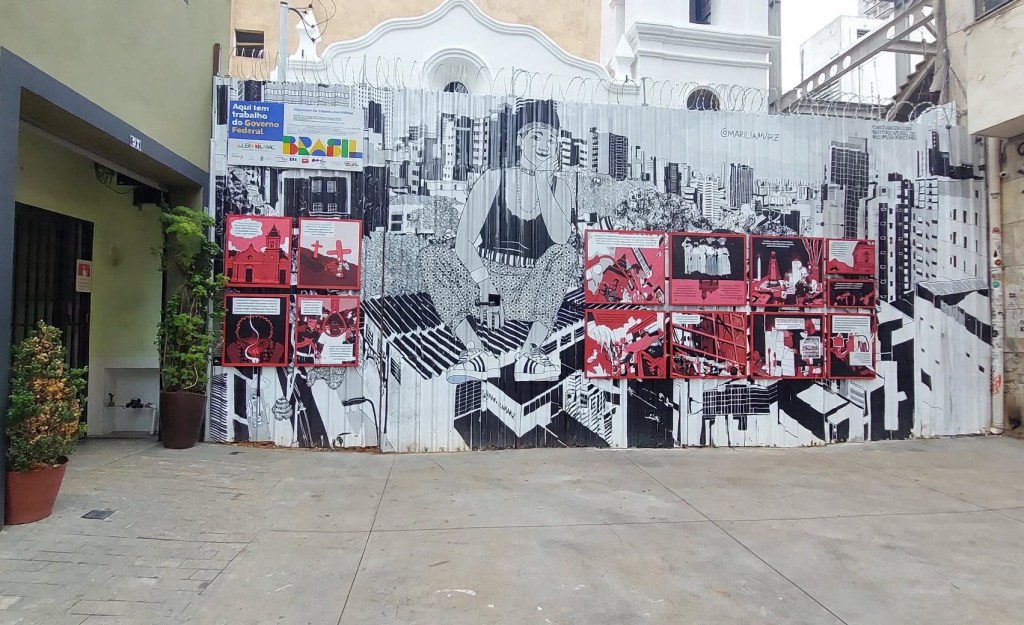
2. Reclaiming the Unseen Roots: Madrinha Eunice and Afro-Paulistano Samba
What makes Liberdade fascinating—and what gives it that distinct “border” feel—is how two seemingly completely different worlds occupy the exact same space.
ust a short walk from the metro entrance, you come face to face with a bronze statue of Deolinda Madre, universally known as Madrinha Eunice. She was a Black Paulistana cultural titan born to freed, formerly enslaved parents. Moving to Liberdade in the 1920s, she recognized that the district was a core sanctuary for Black working-class families who kept traditional batuque music and religious roots alive.
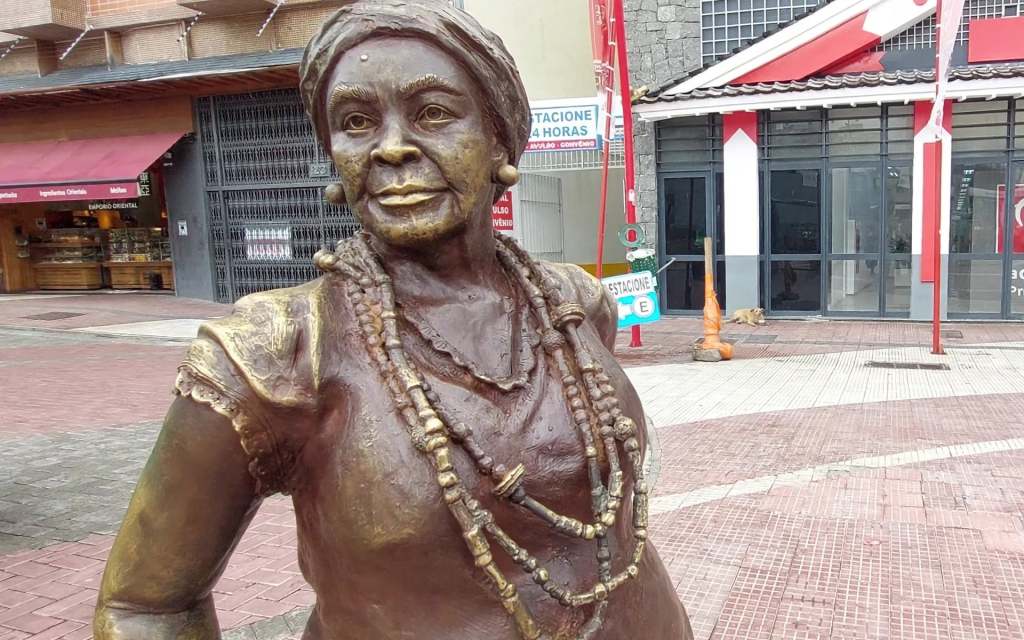
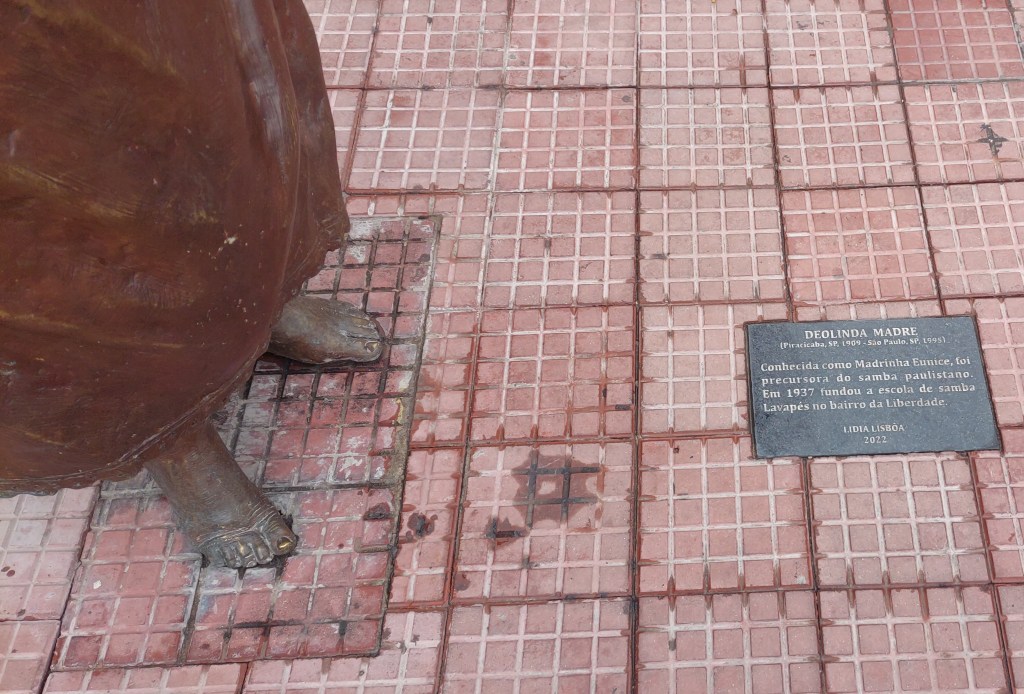
In 1937, Madrinha Eunice founded Lavapés, the oldest continuously operating samba school in São Paulo—right here in Liberdade. Organising samba during the 1930s was an act of high-stakes political defiance; Afro-Brazilian music and street gatherings were criminalized and brutally targeted by police. When her husband gave her an ultimatum to choose between her marriage and her samba school, she chose samba.
Though she had no biological children, Madrinha Eunice personally raised and baptized 41 godchildren in the neighborhood, turning her home into a sanctuary for the community. Her bronze statue, sculpted by artist Lidia Lisboa and installed in 2022, serves as a permanent anchor ensuring her legacy can never be erased again.
Just steps away from Madrinha Eunice stands the concrete Rádio Taissô Tower. It commemorates the daily Japanese radio calisthenics routine brought to Brazil by early 20th-century immigrants—a daily morning practice that continues in the square to this very day.
Crossing Mental Boundaries
We often travel searching for distinct, neatly labeled destinations. But places like Liberdade remind us that human geography is rarely simple or one-dimensional.
Liberdade isn’t just a Asian tourist hub, nor is it strictly a solemn historic execution ground. It is a living palimpsest. It forces you to enjoy the street food, respect the endurance of the Japanese community that built a home thousands of miles from Asia, while simultaneously honoring the Black memory built into the very foundation of the soil.
When you step into Liberdade, you aren’t just crossing neighborhood borders—you’re crossing through centuries of history.

